Sunday, January 29, 2006

Visa International to Split Up Overseas Divisions; Hedge Against Antitrust Litigation (WayTooHigh.com)

The Financial Times, reporting from the annual World Economic Forum in Davos, Switzerland on Jan 29th wrote that Visa International plans to split several of its overseas divisions. In part, to hedge against their exposure to billions of dollars from merchant interchange litigation.

The mega-banks which control Visa and MasterCard are knitting a plan to become more "transparent" and "independent." While a prudent strategy looking forward, it does little to address their more than decade-long illegal price-fixing accusations. If Visa's plan is to protect its international divisions from the litigation against Visa U.S.A. Inc., the antitrust class-action also names Visa International Service Association as a defendant.

Interestingly, this news comes less than two-days after MasterCard failed in its attempt to disqualify the lead attorneys representing the merchants in what is the largest antitrust case since the breakup of AT&T in the early 1980s.

Earlier, Visa USA announced they would elect independent, outside directors to its board, then MasterCard filed for an IPO. Now, Visa International is using the old shell game to create new entities abroad.

WayTooHigh.com: The Credit Card Interchange Report is not surprised by this overseas shift, especially because we are aware of visits to our site from across the globe, as this is an international issue.

This added international attention, just prior to the opening ceremonies for the Winter Olympics in Italy is actually helpful to the antitrust litigation. Visa, as a global Olympic partner has amplified the current scrutiny from our unanswered question: why are merchant interchange fees in Los Angeles averaging 1.7%, yet in Torino, Italy the charge is only .70 percent?

These pursuits by Visa International are nothing more than shell games and anything but transparent as the credit card associations face hundreds of billions of dollar in damages.

The Financial Times also reported that Michael Lafferty, chairman of the International Card and Payments Council, said "a loss of tens of billions of dollars, whether through a court judgment or an expensive settlement, could bankrupt the global cards industry." Mr. Lafferty, like everyone connected with the banks again failed to address the issue, not about the penalty, but about the illegal action of price-fixing.

[source: WayTooHigh.com]

Saturday, January 28, 2006

Wall Street Journal: "Letter To The Editor"

[The below "letter to the editor" was submitted to the Wall Street Journal and published on Jan 28th in response to a recent WSJ commentary. Disclosure - The co-editors of WayTooHigh.com: The Credit Card Interchange Report are also co-owners of 30 Minute Photos Etc., which is a client of Mr. Wildfang's law firm, Robins, Kaplan, Miller and Ciresi LLP and lead plaintiff in the interchange antitrust litigation].

Dear Editor,

Your Jan. 12 editorial "Credit Where It's Due" ignores the undisputed facts that relate to credit card fees paid by merchants to banks, and the application of the antitrust laws to those facts. As counsel for the merchant plaintiffs in the litigation addressed in the editorial, which challenges the unlawful fixing of these charges by banks, I feel compelled to respond.

First, there is no dispute that these fees charged to merchants by card-issuing banks, so-called "interchange fees," are set collusively by the major banks that control Visa and MasterCard. Representatives of Citibank, Chase, Bank of America, MBNA and the other mega-banks that issue credit cards meet periodically to agree upon how much all banks will charge merchants for credit card processing. Visa and MasterCard do not dispute that they do this; indeed, they claim that it is absolutely necessary to the functioning of their networks. One of the goals of the litigation is to test whether this claim is true.

Second, merchants do not deny that credit card services are valuable to merchants and to consumers. However, the fact that a product or service is valuable is no defense to a charge of price-fixing. Indeed, the principal federal antitrust law, the Sherman Act, was enacted by Congress in 1890 in part as a reaction to price-fixing by railroads of shipping charges to farmers in the Midwest for transporting their corn and wheat to distant markets. There is no doubt that the railroads provided a valuable service, compared with the horse-and-wagon alternative, but that did not permit them to collude on how much they would charge farmers.

Similarly, in today's business world, telecommunications services, airline travel and computers are vital to U.S. businesses, but providers of those products and services are not permitted to fix prices by agreement. And I don't think the publishers of the Wall Street Journal would agree that it would be a good thing for sellers of paper and ink, or Internet services, to agree among themselves on how much they would charge newspaper publishers for these products, even though these products are vital to newspaper publishers.

The cases recently filed by merchants are just at their beginning, but my clients are confident that the courts will ultimately conclude that the fixing of these fees by banks is unlawful. Such a finding would be good news both for merchants and consumers.

K. Craig Wildfang
Partner
Robins, Kaplan, Miller & Ciresi, LLP
Minneapolis

Friday, January 27, 2006

Judge Denied MasterCard's Motion to Disqualify Law Firm (WayTooHigh.com)

In December, MasterCard International sought to disqualify Robins, Kaplan, Miller & Ciresi LLP, as reported in the Twin Cities Pioneer Press on Jan 13. The motion also raised questions about which of two groups of attorneys will be named as the lead plaintiffs' counsel for several retailers involved in the multibillion dollar antitrust lawsuits against Visa International and MasterCard. This forced a delay, which was resolved on Jan 27th during the New York disqualification hearing. Instead, it turned into another "price-less" moment for MasterCard.

Our scorecard is at strike two. The first decision against the credit card associations was during the multidistrict litigation venue hearings. The banks sought to have the case heard in Georgia and lost that round too.

These pauses and delays are a reminder that MasterCard will apparently do nearly anything to deflect from arguing the facts behind the illegal price-fixing violations. And for good reason. Without further delays, their planned $2.5 billion IPO could be hampered and clouded by attention from this litigation.

[source: WayTooHigh.com]

Thursday, January 26, 2006

Credit card price fixing suit could cost industry over $100 billion, experts say (Banking Business Review)

"According to a group of prominent bankers, a lawsuit brought by retailers in the US alleging a number of major credit card issuers and banks colluded to fix processing prices will have far reaching consequences for the industry at large if it is successful..."

Click here to view the article in "Banking Business Review"

Possible Bank-funded PR Blitz Planned (WayTooHigh.com)

While uncertain of the path charted to meet their unambiguous goal, The Credit Card Interchange Report - WayTooHigh.com has observed a flurry of recent interest from the nation's largest and most powerful public relations firms. While pleased that we are regularly viewed by the most well-known influencers of media, their interest in our daily interchange news updates causeƂ’s pause and raises questions. How exactly will the bank-funded credit card associations counter our daily updates and commentary?

A typical rule for multi-national conglomerates is to remain silent and not draw attention to those providing commentary. But, in this case, there is simply too much interest and regular daily visits to think they are just going to stay on the sidelines.

Recently, we observed that visits to this site are lasting as much as one-hour, which means that the banks are either fearing our wrath and studying our leadership, or simply because we now have over 200 unique news and commentary postings to soak in.

The only thing more vast than the canyon of billable hours generated from these legal, PR and advocacy groups monitoring this site, is one question. How are they planning to attack our message which benefits millions of merchants and every cardholder who bares the burden from Visa and MasterCards' multibillion dollar annual hidden interchange tax?

With all this eager reading by the PR firms, perhaps one of them can share our recommendation with the companies paying their salaries? We urge that the full interchange fees be transparent and clearly posted on every charge and debit card receipt.

So far, no response from Visa and MasterCard.

[source: WayTooHigh.com]

Wednesday, January 25, 2006

That's a Lot of Dough-Nuts (WayTooHigh.com)


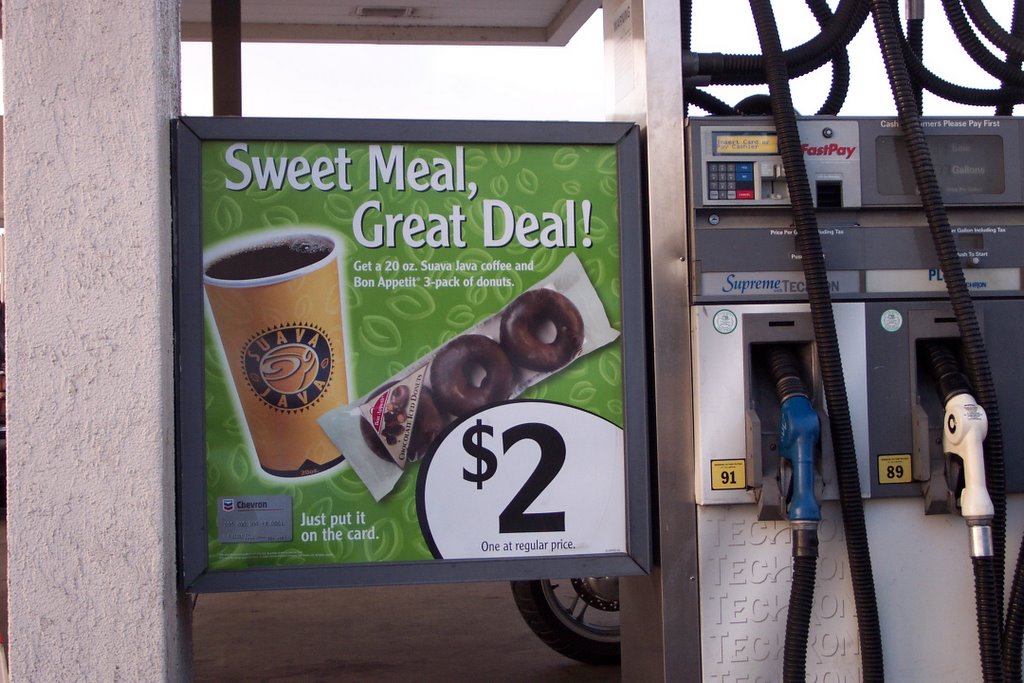
During a recent fill-up at Chevron, placards promoting the use of credit and debit cards to pay for two-bucks worth of coffee and donuts clearly drove home the merchant interchange issue.

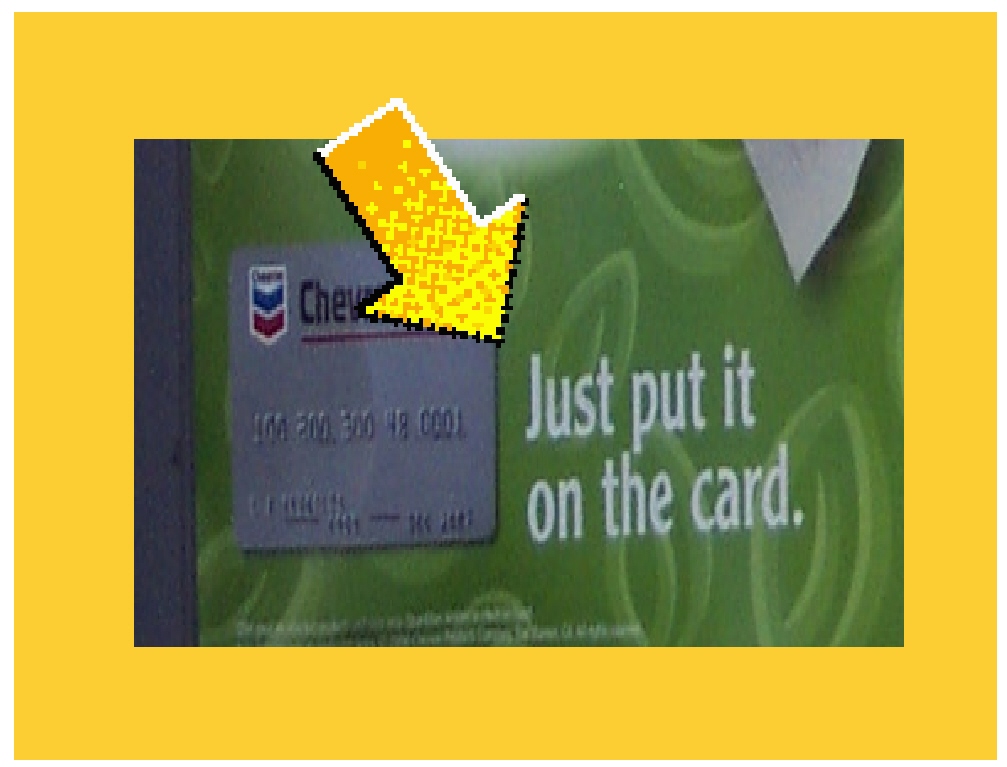
"Just put it on the card," is the promoted message.

It is one thing when you use your Priority Club Rewards Visa Signature card (r) at Cartier. But, at service stations, fast food restaurants and the million of other businesses which ring up small transactions, Visa, MasterCard and the banks are using their market power and making bank on the backs of consumers and merchants.

Take a two-dollar purchase with your debit card, for instance. Typically, there could be a flat $0.50 - $0.75 cents in merchant interchange fees to process that order. For a credit card transaction, there could be a minimum charge plus a percent of the total sale which could be upwards of a dollar under certain processing plans. If merchants have slim margins to begin with, this means that ... well, you understand. This is a lot of "'dough'-nuts" and high degree of profiteering enjoyed by the banks.

Indeed, as the signage promotes: "Sweet Meal, Great Deal," but for whom? In this case, the promotion was not for a bank-branded card, but customers will use Visa and MasterCards too. Millions of companies do have customers who charge for even a cup of coffee: think Starbucks.

Retailers explain these credit card associations' charges as colluding to set artificially high interchange fees paid to the banks. The banks cannot legally get together and fix these prices, which they do as alleged in our antitrust litigation. Yet, MasterCard and Visa continue to explain that the lawsuits are without merit. These bank-owned card associations point to the benefits of the the value of the services receive. That they are right about: there is great value, but the benefactors are the banks.

[source: WayTooHigh.com]

Monday, January 23, 2006

Banks want merchants to be silenced and pretend that U.S. laws are not being violated

Reuters released a detailed article on Jan 23rd about the credit card interchange litigation and how it may lead to "more than $100 billion in damages."

After reading the article, it was interesting to observe that the banks continue to be silent about arguing the law, explaining why their collusive practices are not in violation of the Sherman Antitrust Act, and why the alleged price-fixing is not illegal. Instead, they get groups like The International Card and Payment Council to explain to Reuters that "a merchant victory would reverberate disastrously." A consultant to Citibank articulated an even weaker solution: he wants the Federal Reserve to simply have the court dismiss the litigation or tender another way to resolve this without being "disruptive to the banking system and the U.S. economy.''

Ok. But, what about the banks illegal activities. What about the facts?

There is near silence even though Visa tries to protect itself from future litigation by adding independent members to its board. Even MasterCard is trying to insulate itself from future litigation by mortgaging its liabilities onto the public through an IPO. [We still think the MasterCard IPO will be delayed and eventually cancelled]. With all this gamesmanship, can Susan Molinari and her advocacy group which, remember: "enjoys the financial support from Visa USA" be far behind?

Whatever vocal weaponry they prepare to hurtle at us, The Credit Card Interchange Report - WayTooHigh.com is prepared to deflect every trick they launch against their customers (merchants and consumers). Using this forum, we are responding instantly and repeating the facts over and over again.


Click here to view a link to the Reuters article.

[source: WayTooHigh.com]
Saturday, January 21, 2006

Banks Should Study "Moore's Law" To Reverse Unbridled Fee Increases (WayTooHigh.com)


Several months ago, 30 Minute Photos Etc., lead plaintiff in the multibillion dollar class-action antitrust litigation against Visa, MasterCard and its member banks charged $5.00 to scan a picture to a digital CD. Today, that fee is low as just 5-cents. Technology has made this in-demand service super fast and much less costly. Within minutes of shoe boxes full of precious family pictures arriving, it is processed, scanned and prepared for same-day return delivery across the country.

Why is this so important and relevant to the interchange litigation?

All entrepreneurs understand, especially those involved in technology that we owe a great deal to Intel's cofounder. In 1965, Gordon Moore saw the future and fathered the popularly known prediction of "Moore's Law". This states that the number of transistors on a chip doubles about every two years. Over time, this observation about silicon integration has fueled the worldwide technology revolution which Moore's Law helped build.

The result: more performance, less cost. To personalize this, today your entire shoe boxes with generations of family photos are preserved on digital CDs, index prints and reprints ordered within minutes. Credit also goes to another technology leader, The Eastman Kodak Company and its cutting-edge high speed scanning and Kodak Image Capture Software. This is the engine that powers 30 Minute Photos Etc. and offers an ideal example of how methodically Moore's Law works. From $5.00 to 5-cents, and from what would have taken several days to now scarcely a few minutes to complete an entire order.

While Moore's Law deals with technology and decreasing costs, the financial industry slipped past this lesson and proven rule. And, merchants and retail customers are paying billions of dollars every year because of it.

Instead of practicing Moore's Laws, Visa and MasterCard employee "More's" Law. Seemingly, everything to them costs more - or at least they charge more. When 30 Minute Photos Etc. was founded in 1990, we were just a local retail photo center in southern California. Back then, like all retailers, we ordered bulky, multi-page charge card carbon receipts and used cumbrous credit card imprinters that we swiped the card through in order to transact a charge card. Afterwards, each receipt was bundled together and mailed out of state for processing. The clearing and reimbursement process took days. Back then, the interchange fees were cost based and there were just a handful of separate charges which were a fraction of what it is today.

Today, the actual cost to transact a single electronic charge transaction costs nearly the same at 30 Minute Photos Etc. as it does for Wal-Mart. The infrastructure, technology and ease-of-use makes the actual cost to operate this payment system nearly irrelevant when all the other bank fees are weighted in. But, to companies like MasterCard, it is "priceless"and constantly rising.

To better explain: now that the photo center's business is nationwide, and like most Ecommerce transactions, we are entirely beholdened to charge cards for transacting business. When an online photo order is submitted to
30minphotos.com, we have no idea what our cost is. Did the customer use a debt card? Signature Visa Card? Affinity / frequent flyer card? Foreign bank card? Or, one of the other choices that now represents nearly one-hundred separate interchange fees? It is anyones guess.

What all Ecommerce businesses have in common is discrimination. Purchase a box of Mrs. Fields cookies online and they are forced to pay a wide variety of interchange fees, but if you stop by their retail store and write a check, there is no charge. If you use a debit card from Canada's PIN Network in that nation there also is no fee. Yet, while restaurants can insist that customers pay in cash, online merchants are discriminated against. They face these unbridled, price-fixed, bank fees which on low margin sales, often yield rates more than their entire net profit.

Because The Credit Card Interchange Report - WayTooHigh.com has quickly grown to become a leading voice for merchants and regular contributor to the media, our call to stop this hidden tax on customers is gaining momentum every day. This is why we share this commentary with all our readers. We also hope that Visa, MasterCard, the banks, their agents, public relations, political advocacy groups and planetary-sized teams of lawyers who regularly visit WayTooHigh.com study Moore's Law too educate, accelerate performance and exponentially decrease merchant interchange fees.

30minphotos.com is just a single example which represents millions of businesses that used technology to transform its business. Now, the banks also need to catch up and seamlessly integrate technology to speed up payment transactions and lower the costs. Even in the
less technologically-advanced nations of Brazil and Italy, their interchange fees are just half the rate in the U.S. and they face greater levels of fraud and costs.

Consider what Intel shared: Today, people find parts of their lives enhanced by technology. Families and friends who connect in an instant, sharing photos, playing games and trading advice, all while overcoming great distances and time differences. Doctors who access the Internet in the examining room, verifying the latest updates on chemical reactions, alternatives, and availability of your elder parents' prescriptions. On-the-go parents who can carry games and other digital entertainment for their younger children on sleek, light and portable devices that also allow them to call their older, free-spirited teenagers to check on their well-being. Entrepreneurs who launch new business models, ultimately enabling new market segments, companies, products and services, and employment sectors to grow.

Underlying and enabling all these experiences are advancements in technology as defined by Moore's Law ... So, rhetorically, why are Visa and MasterCard still practicing science fiction with "More's" Law?

Instead of working with their two core customers - merchants and consumers - they are using politics, high-powered lawyers and public relations to protect their fiefdom and thwart off what inevitably helps every other business model.

Beyond interchange fees, a study of ATM fees is another reverse-study of Moore's Law. Banks charge upwards of $2 to draw money from your account. You may also pay fees to another bank involved in the transaction. Soon, more banks will curtail waiving certain other fees. These add up. Bankrate.com reports that the bank's earn more than $4.3 billion from these excess fees. Reuters reported that "in South Carolina, where Wachovia, Bank of America, BB&T and Carolina First Bank account for about half of the banking market, customers can feel the effects. For example, Bank of America, which has 16,700 cash machines worldwide, reported in 2004 that card fee income increased by 50 percent over 2003 to $4.5 billion. And through the first nine months of 2005, the bank was on pace to surpass the 2004 total, reporting $4.2 billion in fee income."

The banks argue these services are a benefit and the fees are for the convenience of using their services. This is much like when you purchase tickets to a concert or sporting event from Ticket Master and they tack on a myriad of charges; one is even identified as a "convenience fee".

In the real world, businesses cannot charge such exploitive fees. For instance, when 30 Minute Photos Etc. invented and launched its new
high-speed photo scanning service, we used technology and the lower fees to our advantage. Customers embraced the fact that due to technology we no longer charge $5.00, but rather as low as 5-cents to instantly scan and preserve their generations of family pictures with ShoeboxReprints.com. conversely, while banks explain their ATM fees are a necessity to cover "out-of-network ATM's," consumers describe it differently: unconscionable profiteering.

Unlike the automated interchange payment system network, there are steep costs for servicing and maintaining ATM machines. But, even so, to charge a mom - urgently rushing out to an ATM to get money to buy last-minute groceries for her family - as much as $4.00 in ATM fee is, like interchange fees ... WayTooHigh

[source: WayTooHigh.com]

Friday, January 20, 2006

How Banks Might Plan to Attack Merchants (WayTooHigh.com)


What does it take to protect the banking industry's $25 billion annual merchant interchange treasure?

One caper had their allies recently writing a commentary suggesting the only solution to the interchange merchant litigation are Congress and legislative sanctuaries.

Another trick is to eclipse the fact that the banks are accused of illegally inflating credit card transaction fees by plotting to unload MasterCard's liabilities through a stock sale early this year. The Credit Card Interchange Report - WayTooHigh.com maintains this strategy could fail as investors are educated on and thwart this chancy scheme.

Beyond patronizing political support and stock sales, expect the banks to continue working closely in 2006 with an arsenal of corporate advocacy groups. To better characterize the types of resources available to Visa and MasterCard, the following is an overview of resources they may use in an attempt to safeguard their fleeting grip on retailers and consumers.

While omitting the company names, these profiles are representative of the types of organizations available to the banks to protect their interests. Although not implying any specific involvement, these corporate profiles come directly from various websites to better help merchants and consumers know what we are up against. [We are in no way suggesting any of the below unidentified companies are connected with the banks - even though some do promote banks as clients on their websites.]


Profiles of Various Corporate Services Available to the Banks
COMPANY A: - Marketing intelligence company that analyzes and distills the opinions and perceptions of the online world. Scans blogs, message boards, opinion sites and other public forums. Processes the info and prepares actionable market insights about companies, products, people and issues. Enables clients to understand the opinions, perceptions, attitudes and behaviors of consumers, capturing and analyzing topics and issues of most importance to them. In the online community, consumers speak in the context of their lives, and how their lives interact with your brands and products. Most important, it's unprompted, unsolicited and timely.

COMPANY B: - Earned media is a necessary component of successful marketing. The results are predictable. It generates the headlines and appearances, while others struggle to establish their identity. This company specializes in getting media coverage and works with some of the world's largest corporations. From campaign design and strategic development to tactical implementation, tasks include issues management, consumer education and legislative support. They manage media relations, arrange media tours, work with the press at the courthouse each day during litigation, work with editorial boards around the nation, produce multimedia press kits on CD. Their "consumer education efforts," result in getting the clients message integrated within national media stories. This company's client list is a who's-who of staunch conservative Republican causes and is reported to be run by former Pat Buchanan communications director Greg Mueller. Recently they held a press conference supporting Supreme Court nominee John Roberts' confirmation and even helped promote "Swift Boat Veterans for Truth" during the 2004 presidential campaign.

COMPANY C: - This law firm provides clients with experience and advice in virtually every discipline of the law. They coordinate multifaceted teams in negotiation, dispute resolution and transactions. With lawyers in the United States, Europe and Asia, and extensive practices in Africa and South America, they can respond knowledgeably, effectively and quickly, whether the issue is local, regional, national or international. Their lawyers speak more than a dozen languages and are familiar with international business customs.

COMPANY D: - This management consultancy firm delivers tailored solutions to international organizations seeking to achieve their strategic goals through effective leadership and management of their human capital worldwide This organization uses surveys to collect data on a wide range of organizational issues to support effective planning and decision-making.

COMPANY E - This economics consulting firm specializing in financial and economic analysis of policy, regulatory, and litigation matters for corporations, governments and public-sector entities in the United States and worldwide. They combine the expertise and practices of its staff with research and support capabilities on a wide range of antitrust, regulatory and economic policy matters. The firm has experience in academics, senior government positions, and consultancies with analytical capabilities, testifying and advisory experience, and a thorough understanding of how governments operate. Its directors have been engaged by private parties from small businesses to multi-national Fortune 500 companies, and by local, national and international public-sector organizations.

COMPANY F - This information management company reviews competitors and analyzes information, like this website. They try uncovering the challenges businesses face to help make "fact-based decisions." This includes identifying pertinent issues that will impact their clients with reactive facts to stay ahead of the competition. From their website they explain a client profile: "The management team is becoming increasingly frustrated because it cannot accurately anticipate key issues that are impacting the company's business. The organization feels it is always reactive, communicating after the facts and is unsure of what to say. They need fact-based answers and need to be warned in advance."

COMPANY G - Business and Politics are closely commected at this bipartisan public affairs firm which works closely with "a wide range of Fortune 500, trade association, political campaign, and nonprofit clients to mobilize and motivate their stakeholders." Their website explains that their "team of professionals brings experience from a bipartisan range of some of the most successful grassroots movements in American history, including MoveOn.org, the NRA, the Draft Wesley Clark movement, and the Christian Coalition. Working together, they combine cutting-edge technology with established communications practices to create campaigns that are incredibly cost effective and make an impact. They specialize in "merging online advocacy technology with communications strategy to recruit, educate and mobilize client stakeholder networks. Our programs help clients shape public opinion, build and strengthen relationships with key stakeholder groups ... and generate outreach from stakeholders to key decision makers and the media to advance their public affairs agenda."

[source: WayTooHigh.com]

Wachovia Earns Record $6.64 Billion in '05; Citigroup Earnings Soared 30% in 4th Qtr

As bank earnings are announced this week, this marks another quarter with double-digit growth from the banks allegedly collusive, price-fixing practice of setting the merchant interchange fees. This time, for instance, Wachovia announce on Jan 19th that it reaped a 13 percent growth increase in fee and other income generated primarily by strong debit card interchange income and retail service charges.

Also on Jan 19th, Capital One Financial Corp. one of the country's largest credit card issuer of Visa and MasterCard announced that its profits were up 44 pct on fees.

On January 20th, Citigroup reported its fourth-quarter earnings rose 30%; revenues from the bank's international cards business advanced 19% to $1.36 billion.

Thursday, January 19, 2006

Mastercard, VISA face legal complaint over fees

19 January 2006

BERLIN - A legal complaint aimed at cutting fees charged by credit card groups VISA and Mastercard was lodged Thursday with the country's federal monopolies body, a retail lobby group said in a statement.

The complaint says fees charged both companies to stores accepting credit cards average 1.5 per cent per sale and that this has prevented widespread acceptance of credit cards in Germany.
"Only 5 per cent of all retail sales are paid for with credit cards," said the statement by the German Retail Association which made the complaint to the Bundeskartellamt - the federal mergers and monopolies commission.

The complaint calls on the Bundeskartellamt to order fees to be reduced and for improved transparency aimed at improving credit card sector competition "which hardly exists."
Spain, the German lobby group notes, has ordered a step-by-step reduction of Intercharge fees to between 0.54 per cent and 1.10 per cent by 2008.

[source: Expatica's German News]

Wednesday, January 18, 2006

Credit Where It's Due (WSJ Commentary)

The Wall Street Journal, Jan 12, 2006 "Review & Outlook" (subscription required)

[The following "Letter to the Editor" was submitted to The Wall Street Journal by the co-editors of The Credit Card Interchange Report - WayTooHigh.com in response to a Jan 12 commentary, "Credit Where It's Due"].

Dear Editor,

The Jan 12 Review & Outlook "Credit Where It's Due" chose to poke fun and mock millions of retailers and consumers with weak arguments. Could it be the WSJ is supportive of these sky-high merchant interchange fees because among your largest sources of ad revenues are the very banks which stand accused of collusion and illegal price-fixing?

This multi-billion dollar antitrust litigation against Visa, MasterCard and the banks which own the two leading credit card companies is not about the convenience they provide to merchants, but about why interchange fees in the U.S. are double the rate in Italy and other industrialized nations. It is about why Canada has a zero debit card interchange fee, as is the case with check writing in the U.S. which also enjoys no interchange fee - even though the cost and labor associated with clearing and processing non-electronic transactions is substantial.

Instead, this is about market power, not by Wal-Mart, but the banks which set these fees. When you suggest that government intervention would just cause a mess, think of the mess caused by Enron and World Com from an unbridled lack of intervention. Remember, Congress enacted antitrust protections more than one-hundred years ago to give the courts authority to remedy these practices. Now, we see giant multi-national retailers joining with "mom and pop" entrepreneurs in support of this litigation; all on the same side as consumers who are burdened with paying this $25 billion annual hidden tax.

Sincerely,

Mitch Goldstone and Carl Berman
co-editors
The Credit Card Interchange Report - WayTooHigh.com

Tuesday, January 17, 2006

Protestors Demonstrate Outside the National Retail Federation's Annual Conference in New York


(January 16, 2006) --(BUSINESS WIRE)--A photo, taken today outside the Javits Center during the National Retail Federation's annual conference in New York, showing protestors demonstrating against interchange fees associated with major credit card companies.

Today in New York, dozens of protestors stood outside the Javits Center during the National Retail Federation's annual conference and expo. The group was demonstrating against the interchange fees that card associations like Visa, MasterCard and American Express charge to retailers every time a consumer uses a credit card. The topic of interchange fees has been a hot button issue for the retail industry, which paid approximately $39 billion in fees to the card associations last year. Ultimately, this cost is passed onto consumers through higher prices.


Retailers interested in eliminating their interchange fees were encouraged to sign up at stopinterchangenow.com. *

# # #


The well-organized protestors waved placards with a wide variety of messages that largely parodied the multi-million dollar advertising campaigns and slogans from the leading charge card firms. The slogans included:

"Visa: Everywhere You Want a Fee"

"More Than $pare-Change Without Interchange"

"American Express: My Life. My Card. My Fee.

"MasterCard. Not Priceless"


* Stopinterchangenow.com believes merchants should be able to accept credit payment from customers without having a significant portion of profits siphoned off by the card associations. The 1996 class-action lawsuit, brought by NRF and the nation’s largest retailers, opened the marketplace for payment alternatives outside of the "Honor All Cards" rule. Finally that alternative is on its way and a credit revolution is coming. Soon all merchants will be able to accept credit without paying interchange fees.

Monday, January 16, 2006

Other than winning The Golden Globe Awards, the film "Syriana" and the banks have much in common (WayTooHigh.com)

[Editors note: On Nov. 16th, we first published the below commentary and are republishing it again after the film's success at The Golden Globe Awards]

(Nov 16, 2005) U.S. Senator Diane Feinstein's office invited the co-editors of The Credit Card Interchange Report - WayTooHigh.com to The Academy of Motion Picture Arts and Sciences in Los Angeles on Nov 12th for an advance screening of the Warner Bros. political thriller "Syriana".

Editing of the film by executive producer Steven Soderbergh, who directed "Traffic" and "Erin Brockovich," just completed last week.

Staring George Clooney and Matt Damon, this ambicious movie will be released in December. It involves brokering back-room deals in Washington and the intrigues and corruption within the global oil industry. The multiple storylines are weaved together to illuminate the human consequences from the fierce pursuit of wealth and power.

Why is this important to the credit card interchange litigation against Visa, MasterCard and its member banks?

The powerful U.S. oil companies fictionally portrayed in Syriana were involved in complex corruption and corporate mischief with explosive impact upon the world. While the backdrop for Syriana involves the global oil industry, there are many parallels to the depths of illegal corporate maneuvering we assert are practiced by the banks which own Visa and MasterCard. Their collusive price-fixing and global reach parallels many aspects of this fictional movie about failures of government.

Syriana illuminates the inner workings of what easily can relate to the banking industry and the executives who keep it running. In portraying the considerable influence and exploitation through many points of view, there are startling parallels to the fight against the multinational banks' anticompetitive practices.

Just as "The China Syndrome" in the late 1970s, "Wall Street" in the 1980s and "Erin Brockovich" in the 1990s drew attention to corporate greed, so too will this film.

Gordon Gekko's "Greed is good" speech in "Wall Street," symbolized a decade. Yet that famed phrase is about to be overshadowed by the new corporate-speak from actor Tim Blake Nelson in Syriana:

"We have laws against corruption precisely so we can get away with it. Corruption is our protection. Corruption keeps us safe and warm. Corruption is why you and I are prancing around in here instead of fighting over scraps of meat out in the street. Corruption ... Is why we win."

"Finally, a Useful Blog" (NACS Magazine)

From the January 2006 edition of NACS Magazine (page 64)....

"Finally, a Useful Blog. You've not alone in thinking that interchange rates are too high. The aptly named www.WayTooHigh.com agrees, providing regular updates drawing attention to issues affecting merchants and consumers. It says that the goal of its daily blog is to reform and antiquated, costly and unfair payment system and explain why interchange is a hidden tax on consumers."

Friday, January 13, 2006

Background News on Lead Plaintiff, 30 Minute Photos Etc.

To help personalize the interchange litigation, this news profile relates to lead plaintiff, 30 Minute Photos Etc.

The company operates a retail and national online boutique photo service. Like most ecommerce businesses, one-hundred percent of their online orders are generated through charge card transactions. Yet, with nearly one-hundred separate interchange fees, it is almost impossible to identify the cost for each transaction. On small order transactions, most of the sale is paid to the banks for processing the transaction.

[source: WayTooHigh.com]

Thursday, January 12, 2006

Mexico Takes Lead in Forcing Lower Interchange Fees (Bloomberg)

Citigroup, Bilbao to Lower Mexican Credit Card Fees, People Say

Jan. 12 (Bloomberg) -- Mexican banks, bowing to pressure from central bank Governor Guillermo Ortiz, agreed to lower fees on credit and debit cards at a cost of $100 million in annual revenue, bankers who helped draft the proposal said.

The charges the banks plan to lower are so-called interchange fees, or the money the merchant's lender pays the bank that issued the card. The fee makes up part of the bigger commission that banks levy on shops to process card payments. That overall fee reaches as much as 4.5 percent in Mexico.

Mexico is joining the U.S., U.K., Spain and Australia in seeking to lower fees that banks levy on retailers, restaurants and other businesses to process card payments.

[source: Bloomberg, click here for complete coverage]

Wednesday, January 11, 2006

Visa USA Net Income Soars 72%

[WaytooHigh.com, editorial comment: We were delighted with the opening remarks by Visa USA's CEO and president. This was a watershed moment. Mr. Coghlan reflected that due to his background as a former merchant, he is interested in "exploring new and more creative ways of working cooperatively with merchant partners." This speaks volumes about his commitment to his customers. As fellow entrepreneurs and retailers, we find these heartfelt comments to be reaffirming and. looking forward, an important new beginning].

Excerpts from the Visa USA Annual Report 2005

1) "Net income increased 72 percent, to more than $360 million, heralding a rapid return to a positive equity position soon after the Retailers settlement."

2) "With respect to existing litigation, I want to comment specifically about interchange lawsuits brought against Visa and other payment systems by merchants. As a former merchant, I understand the tremendous economic pressures merchants face. I believe that there are better ways than lawsuits to lower costs. While we remain confident in our ability to defend interchange from merchant and other attacks, I won’t let anything stand in the way of our exploring new and more creative ways of working cooperatively with merchant partners to help them achieve their goals and better serve their customers. If we can find solutions that work for all of us, we will have an opportunity afforded few others." - John Philip Coghlan, Chief Executive Officer and President

3) "Multidistrict Litigation Proceedings. During 2005, merchants who accept Visa-branded payment cards have filed a number of additional cases against Visa U.S.A. Inc. and other defendants, asserting violations of the federal antitrust laws, and seeking treble damages for alleged overcharges in merchant discount fees, along with other relief. Currently, nearly fifty additional cases, most of which are asserted is purported class actions, are pending against Visa U.S.A. Inc. On October 19, 2005, the Judicial Panel on Multidistrict Litigation (“JPML”) issued an order establishing a Multidistrict Litigation (“MDL”) in the Eastern District of New York before the Honorable John H. Gleeson, to coordinate pretrial proceedings in these cases. Fourteen of the cases have already been ordered transferred to the Eastern District of New York; the JPML has been notified of the remaining potential “tag-along” actions, and those cases have been or likely will be included on a Conditional Transfer Order in the near future. Plaintiffs in four of the potential “tag-along” actions have indicated that they intend to oppose inclusion of those cases in the MDL. The majority of these cases include claims that interchange violates Section 1 of the Sherman Act. A number of the cases, either instead of or in addition to claims based on interchange, assert that Visa’s “no surcharge” and other rules violate Section 1 of the Sherman Act. Some of the cases also allege that Visa ties “Premium Credit Cards” to other Visa credit cards, and that Visa ties “Payment Guarantee Services” to other network services. Several cases claim that Visa has monopolized the “debit and credit services market” in violation of Section 2 of the Sherman Act. Additional allegations in some of these cases include the claim that Visa’s “no-surcharge” rule constitutes a conspiracy to monopolize trade in violation of Section 2 of the Sherman Act, and that Visa engages in exclusive dealing. One case claims that interchange constitutes unjust enrichment and violates the consumer protection statutes of 22 states and another alleges monopolization claims under Arizona unfair competition law. Finally, a few cases allege that the purported tying of “commercial products” to a merchant’s acceptance of other Visa services violates Section 1 of the Sherman Act, that the same conduct constitutes attempted monopolization and conspiracy to monopolize in violation of Section 2 of the Sherman Act, and that merchant discounts are supracompetitive as a result of the alleged tying arrangements. Proceedings in all of these cases are at an early stage."

[source: Visa USA Annual Report]

Regulating Merchant Interchange Fees (Washington State Senate Bill)

Introduced by Sen. Ken Jacobsen on January 6, 2006, to prohibit a merchant's financial institutions from charging a credit/debit card holder's financial institution interchange fees that are more than 1.5% of the total transaction. More info.

[source: Washington State Legislature]

Saturday, January 07, 2006

Banks' Silence is Deafening (WayTooHigh.com)


With nearly 200 unique postings and daily visits recorded from around the globe, including from the Federal Reserve in the U.S. and international equivalents, The Credit Card Interchange Report - WayTooHigh is among the first daily chroniclers of this multi-billion dollar issue.

As major banks, along with the two credit card associations which they own and control (Visa and MasterCard) regularly visit this site, a growing question is why has their silence been so deafening? They know the issues and they have read the postings. Yet, their silence is further distancing themselves from their two primary customers - merchants and consumer cardholders.

Even the media visitors to this site have questioned several issues we have addressed. They too don't know if the new American Express-branded bank cards will incur the traditionally higher interchange fees. Another recent question: why will spectators to the Winter Olympics in Italy face merchant interchange fees that are nearly half the rate charged in the United States?*

Retailers are asking questions. Consumers are demanding answers. The media too continues to also largely face a silent, non-response from the banks.

As well-known entrepreneurs and business leaders, the co-editors of The Credit Card Interchange Report - WayTooHigh.com also knows how the game of multinational public relations works. Don't respond. Stay silent. Hope the noise and focus fragments.

Conversely, the questions against the banks continue to mount and go unanswered. Retailers want to understand why the collusive, anti-competitive, price-fixing claims continue to impair this vital payment system while other nations have successfully addressed and are resolving the problems.

Just as films like "The China Syndrome" in the late 1970s, "Wall Street" in the 1980s and "Erin Brockovich" in the 1990s drew attention to corporate greed, so too will The Credit Card Interchange Report - WayTooHigh.com

In the case of American hero, Erin Brockovich, she had the power and human spirit to battle a regional adversary. The difference is this time the credit card interchange fight blankets the entire nation. It affects all retailers and all consumers. Even a single-mother raising her children in an inner-city is affected. When she buys milk at a corner convenience store, her cash payment is actually helping to subsidize the premium Signature Visa cardholders' frequent flyer mileage accruals.

The battle is larger than Erin Brockovich faced, yet the adversaries remain largely silent. The defendants in this litigation stand acused of violations and illegal activities, including of the Sherman Antitrust Act.

The real-life story of Erin Brockovich took place before the Internet, before blogs and other high-tech forms of online activism. While Ms. Brockovich had to walk door to door, the co-editors of WayTooHigh.com just press a few buttons and instantly are read by many, including the banks, their affiliates following this site, consumers and other interested parties across the nation and abroad.

Like Ms. Brockovich's triumph over insurmountable odds, The Credit Card Interchange Report - WayTooHigh.com remains confident that with more transparency, daily updates and increased understanding this battle too will quickly lead to a victory for every consumer and every retailer - even if the banks deafening silence hopes we just go away.

[source: WayTooHigh.com]

* (source, NACS Magazine, July 2005, "Cards Costs" 2004, MPC)

Friday, January 06, 2006

Sunday, January 01, 2006

2006 Begins With Even Less Credit Card Competition (WayTooHigh.com)


Among the biggest financial news stories during 2006 will be the illegal, inflated credit card interchange transaction fees charged by credit card issuers. This case affects all merchants, consumers and pits the banks against its two core customer bases.

The Credit Card Interchange Report - WayTooHigh.com will expand its coverage due to the nearly daily updates on this multi-billion antitrust litigation. Even though there has been a further consolidation within the credit card issuing business, the news and issues circling this enormous issue continues to balloon.

With Bank of America's acquisition of MBNA, there are now just five giant credit card issuers. Combined, they control nearly 3/4 of all the business. The irony is that even as Bank of America doubles the size of its credit card business, and their cost to process accounts will be scaled down, retailers are poised to face huge new merchant interchange fees.

With Bank of America completing its $34 billion acquisition of MBNA, the result also means an immediate reduction of credit card competition and forecasts for even more oppressive merchant interchange fees. The combined valuation means that Bank of America is now the country's largest credit card issuer.

During the next few weeks, The Credit Card Interchange Report - WayTooHigh.com will begin profiling weekly "Interchange Horror Stories." The goal is to draw additional attention to this $25 billion annual hidden consumer tax. With this latest acquisition, we anticipate drawing more attention and fodder from Bank of America's new role as lead purveyor of illegal price-fixing of merchant interchange fees.

[source: WayTooHigh.com]

FAST FACT: No Interchange fee works in Canada


DID YOU KNOW?

The U.S. is among the only market where interchange fees are increasing. Canada, for example, has a zero interchange fee for debit cards; their PIN Network is the most popular way to transaction business. U.S. Interchange fees are 3-times higher than in Australia and two-times higher than in the UK.

Tuesday, December 27, 2005

Interchange Revenues Leap Over Holidays (WayTooHigh.com)


With consumer spending up nearly 9% from holiday shopping, what exactly did the banks earn and how much did retailers have to pass along to Visa and MasterCard for credit and debit card transactions?

Because merchant interchange fees are an elusive component of bank profits, and because there are nearly one-hundred separate charges, it is anyone's guess how well the banks did from soaring holiday shopping. We know that MasterCard Advisors, a unit of MasterCard International said that holiday shopping was up 8.7% ahead of last year.

[source: WayTooHigh.com]

Friday, December 23, 2005

Is MasterCard International's Due Diligence Lacking? (WayTooHigh.com)

An open-letter to MasterCard International's president and CEO, Robert W. Selander and to the company's general counsel and secretary, Noah J. Hanft

Dear Messrs. Selander and Hanft,

With just weeks away from seeking the financial confidence and $2.5 billion from public investments, the second largest bank-owned credit card association, MasterCard International, has yet to update its website.

For months, The Credit Card Interchange Report - WayTooHigh.com has been mentioning that the MasterCard.com website continues to post a timeline from only previous merchant litigations.

As the bank-owned credit card association now faces
multiple antitrust actions targeting the core of its revenue stream and because this price-fixing antitrust case is among the largest in our nation's history, why is there such a void?

MasterCard continues to fail in making sure that the case is clearly referenced on its company information litigation page. There is no mention at all.

Viewing the MasterCard International website suggests that the banking industry is mystifyingly protected from complying with the Sarbanes-Oxley Act, which oversees corporate governance and reporting practices. The Sarbanes-Oxley Act Section 409 pertains to 'Real Time Issuer Disclosures,' where companies are required to disclose to the public, on an urgent basis, information on material changes in their financial condition or operations. Ordinarily, these disclosures are to be presented in terms that are easy to understand and supported by trend and qualitative information of graphic presentations as appropriate.

So, why is there no clearly presented disclosure information on the MasterCard International website?

Sincerely,

Mitch Goldstone and Carl Berman
co-editors
The Credit Card Interchange Report - WayTooHigh.com

[source: WayTooHigh.com]

Thursday, December 22, 2005

MasterCard, Inc. uses disadvantaged as pawn in the IPO scheme (WayTooHigh.com)

The MasterCard planned IPO is gaining even more attention for its schemes and gimmicks. The latest, as reported by Reuters is to bestow 10% of the investors proceeds as a ruse to fund a MasterCard Foundation Charity.

The hubris of using other people's money to fund goodwill philanthropy by the 1400 banks which own the credit card association is unconscionable. Has any other multi-national corporation ever devised this type of scheme to deflect and use investors money for this type of cause?

In addition, MasterCard is also planning to use upwards of $650 million from the IPO proceeds to battle 30 Minute Photos Etc. and the other merchants who are standing up to their price-fixing charges and anticompetitive antitrust violations.

[source: WayTooHigh.com]

What's at Stake in the Interchange Wars (Green Sheet)


Interchange, once a minor fee levied to cover the costs of processing a credit card transaction and the risk assumed by the issuing bank that the credit will not be repaid, has skyrocketed to a flashpoint that industry experts say is certain to change the industry, although opinions are divided on exactly what the fallout may be.

Interchange is also a significant, and growing, expense for merchants. According to the National Association of Convenience Stores (NACS), credit and debit card fees are the third largest expense convenience stores face after store rent and labor costs.
These fees are anticipated to match the cost of store rent by 2020.

NACS points out that in 2004, credit card issuers earned more profits in interchange fees from the sale of gasoline than gasoline retailers earned off those same sales. "Out-of-control interchange fees for credit card transactions are a $25 billion tax on retail transactions that goes straight into the pockets of the card issuers," said Mitch Goldstone, lead plaintiff in a merchant class action antitrust lawsuit filed in June against Visa and MasterCard.

Goldstone is also Co-editor of "The Credit Card Interchange Report" (
www.waytoohigh.com.) "We're not opposed to a cost-based interchange," he said. "The problem is the banks got greedy and raised the rates just to make more money."

Merchants point out that interchange fees have declined or are declining in most other countries but are steadily rising in the United States. "If interchange was actually cost based, it would effectively disappear," Goldstone said. "In Australia it is less than half a percent. And Canada is a great example: Business is thriving even though the interchange rate is zero."

This complexity is one factor that is fueling the debate. "I know exactly what my cost of goods sold are, what every cost involved with my business is, but I don't have a clue what my interchange fee is," Goldstone said.

(Click
here to view entire article).

[source: Green Sheet]

Wednesday, December 21, 2005

American Express Tarnished, the Brand Leader's Cache Faces Saturation (WayTooHigh.com)

In what was anticipated to be a smooth marketing alliance between the banks and American Express’ branded cards, might now be embarking on roaring discord among retailers. Even cardholders are beginning to understand that using new super-high-margin Citigroup, Bank of America or HSBC charge cards with the American Express logo may lead to even higher merchant interchange fees. The new American Express logo on these cards will most likely yield soaring new hidden taxes on consumers.

As reported in the Wall Street Journal (Dec 21 - page, C3), Bank of America chairman and CEO, Kenneth D. Lewis believes that it is difficult to partner with a business they are in litigation against. However, while they settled with American Express, the bank is party to a multi-billion dollar antitrust class-action launched by merchants who accept Visa and MasterCard.

While Kenneth Chenault, chairman and CEO of American Express asserted in the same WSJ article that "the economic opportunity is tremendous," his focus was distracted and myopic. Clearly, the banks and American Express are so entrenched in their orgy of boardroom domination that they truncated the focus group component; if only they involved current cardmembers and retailers. This contentious plan to flood the market with millions of new American Express branded cards, and potentially spike interchange rates will not be supported - even with hundreds-of-millions of dollars certain to be spent advertising this alliance.

For the premium "Platinum" American Express cardholders and the even more exclusive "Black" American Express cards, the appeal and benefits of distinction from these exclusive cards are about to be diminished.

This new alliance with the New York financial-services company is the latest scheme by banks which may outrage retailers and even decimate the venerable American Express brand. Even its cache as the recognized and respected customer-oriented, world leader in quality is at risk. It could be doomed as the strength of its exclusive image will be saturated with millions of new American Express logos popping up everywhere.

Several months ago, The Credit Card Interchange Report - WayTooHigh.com reported on 26 leading issues affecting credit card interchange fees. Two of the primary assertions follow which initially drew attention to what is now about to occur.

* Because banks are now permitted to issue Amex and Discover cards, MBNA and Citibank plan to issue American Express cards, which means, merchants will be flooded with the higher costing premium cards (this translates into a 50% increase in costs from about 140 bp [basis points] to 210 bp. I anticipate they will then convert their classic cards to higher priced "signature" "affinity" and "business" cards.

* The argument by American Express was that their cardholders spend more money. Perhaps this is based on buying diamonds and luxury items, but when you are at a convenience store, the amount charged from a Visa card is typically the same as for American Express. As MBNA and Citibank switch from Visa to American Express, they are appealing to the same group of cardholders with the same spending patterns.

[source: WayTooHigh.com]

Tuesday, December 20, 2005

CBS Reports Online Gambling Earning Billions; Banks Profit Too


Millions of merchants and consumers are not the only groups affected by the banks price-fixing, interchange fees. Illegal online casino gambling is now a multi-billion dollar off-shore industry which generates huge returns to Bank of America, JP Morgan Chase, Wells Fargo, Citigroup and the few thousand other banks which own MasterCard and Visa.

Click here for an update from the November broadcast on CBS' 60 MINUTES which profiled why this is so damaging.

CBS: "I-Gaming: Illegal And Thriving. Billions of dollars are being spent on online gambling Web sites and the majority of that cash comes from American pockets. Despite being illegal in the U.S., Lesley Stahl reports, the industry is thriving." [What few understand is that the banks can be indirectly involved for reaping a percent of every transaction when their debit or credit cards are used. Although banks decline charges to many of these overseas businesses, there are websites to help identify ways to get your charge card approved].

[source: WayTooHigh.com]

Monday, December 19, 2005

MasterCard IPO Might Be Price-Less (WayTooHigh.com)

MasterCard's IPO might just be "price-less," suggests The Credit Card Interchange Report - WayTooHigh.com. The credit card giant is poised to debut a nearly $2.5 billion public offering, but recent articles suggest that the public might become weary of the the planned use-of-proceeds.

The Wall Street Journal on Mon, Dec 19th explained that not all announced IPO deals which are filed actually are completed. WayTooHigh.com expects that the 1400 banks which owns MasterCard, Inc. might have a challenging time trying to unload their credit card interchange liability. The Journal profiled several companies, including Boise Cascade which pulled its IPO after putting it on hold.

WayTooHigh.com is closely monitoring the offering to look for signs that MasterCard also might place its planned stock sale on hold or even withdraw it in early 2006.

For background, click here.

[source: WayTooHigh.com]

Thursday, December 15, 2005

Credit card pricing set to change (Swiss Radio International)


Switzerland's competition watchdog has approved a deal between the issuers of Visa and Mastercard credit cards and banks aimed at cutting costs.

The accord limits fees levied by the card companies on their partner banks and allows stores to offer different prices depending on whether a customer pays in cash or with a card.


Click here to view article.

[source: Swissinfo.com]

Sunday, December 11, 2005

Another Reason Why The Banks Interchange Fee Should Be Zero (WayTooHigh.com)


The National Association of Convenience Stores magazine (July 2005) reported that "interchange fees arguably are meant to cover the technology cost of account processing and the risk taken by the issuing bank that the credit will not be repaid. It is no secret that technology costs continue to fall while processing power increases dramatically."

The previous posting addresses the risk factor, this column focuses on technology.

As well-known entrepreneurs, Mitch Goldstone and Carl Berman, lead plaintiffs in the antitrust litigation against Visa, MasterCard and member banks also co-edit The Credit Card Interchange Report - WayTooHigh.com. This column provides a real-life experience to understand why Visa and MasterCard may be forced to disband its merchant interchange charges.

The nationally recognized business leaders operate an online boutique photo service(30minphotos.com) which recently created an entirely new business model for preserving generations of photos. Their new business, ShoeboxReprints.com is the biggest news in the photo industry since the launch of digital photography. The company previously charged $5.00 to produce one high-resolution digital scan from a single photo; the process would take several minutes. Today, their ShoeboxReprints.com service scans 150 photos of any size -- from wallets to 11x17 enlargements in just one minute. The charge is $49.95 for 1,000 photos; an entire shoe box of pictures is scanned within minutes and mailed back the same day for under 5-cents per print.

This same math applies to the credit card associations. With technology advancing at lighting-fast speed, each few months yields entirely new cost-saving techniques, yet for banking card transactions the fees keep rising?

Just one decade ago when merchants used bulky non-electronic credit card imprinters, the multi-page carbon forms cost a great deal and had to be mailed for processing. This took several days and incurred costly clearing and processing fees, which was why the interchange fees were initially established; it was cost-based.

Today, just as how the cost for digitally preserving photos was cut by Goldstone and Berman from $5 to 5-cents, so too have the costs for banks to process merchant payments. Yet, the latter service continues to face huge, unjustified fee increases.

Visa and MasterCard can learn a great deal from their customers like Goldstone and Berman. Many business services and products share similar cost-savings to lower rates while enhancing the benefits.

[source: WayTooHigh.com]

Interchange Fees Were Designed to Hedge Against Fraud (WayTooHigh.com)


A lead argument by Visa and MasterCard for forcing merchant interchange fees was to cover their exposure to fraud. Although the fraud costs are a faction of the total take from the $25 billion annual interchange charge.

Interchange fees are meant to cover the cost of processing a credit-card transaction and the risk taken by the issuing bank that the credit will not be repaid. If the fraud costs were a real issue certainly, the banks would not want back its riskiest former customers.

Now, the banks are issuing a record number of credit card solicitations to the 2 million Americans who filed for bankruptcy in 2005. The New York Times (Dec 11) reports that the newest target for issuing solicitations are those with the most risk.

In May, The Merchants Payment coalition explained that: "Banks say they charge interchange to make up for bad debt or fraud. With fraud costs consistently decreasing in recent years, however, the costs interchange is intended to cover aren't nearly as much as the amount charged, and banks already make huge profits from cardholder interest and fees. Moreover, the coalition believes that much of the fraud that interchange is intended to cover is the fault of banks' poorly designed card programs, not the fault of merchants."

Only 1 in 2000 of the banks mail solicitation lead to signing up just one new cardholder. Credit card companies mail out 5.24 billion mail solicitation each year yet only 4-10ths of 1% reply. This means 5 billion pieces of mail are garbage. What other industry has such huge profits that they can afford to throw away 5 billion pieces of junk mail every year?

An earlier WayTooHigh.com posting compared the banks to drug dealers. Can you imaging the outrage if a drug supplier or legal pharmaceutical company launched a marketing campaign to former addicts?

[source: WayTooHigh.com]

Wednesday, December 07, 2005

Visa Restructures, Looks to Outsiders for Help (Green Sheet)


Visa U.S.A. announced a major shakeup to its corporate governance structure. The result is that for the first time Visa will allow nonbankers to serve on its board of directors. Since its inception, Visa has been considered a bankcard Association, and only bankers whose institutions issue Visa-branded cards have been given seats on the board.

Pending approval by member financial institutions, Visa will add one new seat to the board and shuffle membership so that financial institutions hold only seven seats and independent directors hold eight. The restructuring is expected to take up to 12 months to complete.

In a prepared statement, Visa said "dynamic changes" taking place in the payments system precipitated the move. Some observers speculate that the intention, at least in part, is to forestall additional litigation over interchange and other contentious issues.

"Visa and our stakeholders will benefit from the wider range of talent and diverse experience that independent directors will bring to the boardroom as they help shape the Association's growth strategies," said John Philip Coghlan, Visa's President and Chief Executive Officer.

"Independent directors will generate added confidence in the organization's decision making and will ultimately strengthen Visa's position with regard to legal issues concerning the impartiality and autonomy of directors."

Visa said the new, independent directors will oversee "core economic decisions such as pricing, member transaction processing and service fees and economic relationships." Financial institution members will be responsible for control and disposition of assets, membership eligibility and corporate governance. Visa spokesman Will Valentine stated that the new board structure will "strengthen the organization competitively, organizationally and legally."

Visa, MasterCard International and member financial institutions of both organizations are under fire for alleged anticompetitive interchange pricing; they face a host of merchant lawsuits. MasterCard announced its own corporate restructuring in August and is in the process of going public (see "MasterCard Plans IPO," The Green Sheet, Sept. 26, 2005, issue 05:09:02).

K. Craig Wildfang, lead plaintiff attorney in two legal proceedings that merchants have brought against Visa, said the change in Visa's board makeup will not have much of an affect on pending lawsuits. "It will definitely not affect their liability going backward," he said. "They are trying to escape their liability going forward."

To be considered as an independent director, one must have "no material relation to Visa or its members for the past five years," Valentine said. "We have very high standards. They must be a
senior level executive with a relevant business, academic or regulatory body."

While Valentine wouldn't discuss specifics, he left open the possibility that Visa might ask a retailing executive to join the board. Visa's member banks are expected to decide on the new board's makeup sometime in spring 2006. Currently, Visa's board is comprised of 16 people, including 14 from member financial institutions and two nonvoting Visa executives (Coghlan and Visa International CEO Christopher Rodrigues).

Separately, Visa International announced new criteria for its own board and the six regional boards that comprise the organization. The new boards will be required to have at least two independent directors, subject to member approval.

[source: GreenSheet]

Friday, December 02, 2005

MasterCard IPO Attempts To Limit Liability and Fuel its Lawyers Battle Against its Customers

The Associated Press reports the MasterCard Inc. planned IPO is "mostly as a defensive measure to combat antitrust lawsuits."

-----

Move seen as method for organization, banks to limit liability

JOE BEL BRUNO - Associated Press


NEW YORK - An initial public offering of a big credit-card outfit might not command the hype afforded a white-hot tech company, but the move could prove priceless for MasterCard Inc. and the big banks that own it.

This week the 1,400 banks that issue its cards -- and together control the brand -- approved a series of proposals that clear the way for an IPO on the New York Stock Exchange early next year. Although the vote is considered a common step for companies going public, analysts and former executives of the nation's No. 2 credit-card brand say this won't be your average IPO.


For starters, the amount of money raised -- estimated conservatively at about $2.5 billion -- will easily trump the $1.67 billion raised by Internet darling Google Inc. And, unlike most IPOs, MasterCard is tapping the capital markets begrudgingly -- and mostly as a defensive measure to combat antitrust lawsuits.

"The paramount reason for them going public is to reduce their legal liability exposure in the U.S. market, period," said Eric Grover, an analyst with corporate consultancy firm Intrepid Ventures.

Both MasterCard and larger rival Visa USA have been accused of anticompetitive practices in dozens of class-action lawsuits that could cost billions of dollars to settle. The architects of MasterCard's plan to go public are betting the IPO will take the wind out of those lawsuits.
After converting to a public company, member banks will give up voting rights -- effectively shielding them from being named in future lawsuits. The move also ends any criticism of the banks having too much influence in MasterCard's operations.

Besides getting a new structure, MasterCard plans to bank $650 million from its IPO proceeds into a war chest to fight pending litigation. The biggest legal challenge are 38 federal lawsuits that claim MasterCard and the banks conspired to artificially inflate interchange fees charged by card companies to merchants.

Already, MasterCard and Visa have paid some $3 billion in damages from a class-action lawsuit led by retail giant Wal-Mart Stores Inc. They've also lost a legal challenge mounted by the Justice Department, which paved the way for rivals American Express Co. and Morgan Stanley's Discover unit to sue for damages.

These legal hurdles have made member banks increasingly nervous through the years, said former MasterCard general counsel Brian Smith.

"When I was there, we had a number of cases and investigations that were brought against individual banks, which have a chilling effect on their executives," said Smith, who served as the company's top attorney from 1974 to 1982 and is now a Washington, D.C.-based senior partner with Latham & Watkins.

He said the next step for MasterCard might be allowing member banks an opportunity to cash out completely -- and instead enter into licensing agreements to continue using the brand. JPMorgan Chase & Co. has an 11.7 percent stake in MasterCard, Citigroup Inc. owns 6.2 percent, and Bank of America Corp. has 6 percent, filings show.

[Source: AP, Charlotte Observer ]