Wednesday, August 30, 2006

Interchange Debit Card Fees Are Anything But 'Price-less' (WayTooHigh.com)

[Repost from March 19, 2006]

Have the bank-owned credit card associations gotten into the cartoon business?

The popular "Where's Waldo" books are a search-and-find photo scavenger hunt designed as a thinking game for educators to develop exercises for children to learn. In each case, Waldo is hidden in the background and the challenge is to identify where he is.


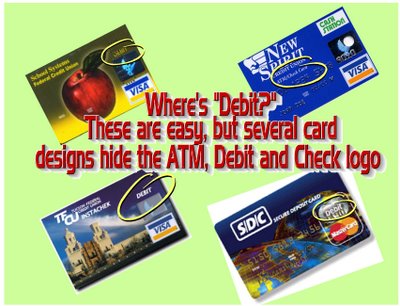
The same activity occurs when a consumer presents a Debit, ATM or Check Card to merchants. In what is becoming a more frequent exercise, retailers are finding it more challenging than ever to identify, not Waldo, but the "debit" or other PIN identification to differenciate the various cards. Why is this so important? Visa and MasterCard's revenues are enhanced when retailers are tricked into accepting the cards which instantly deduct funds from a bank account and forced to pay higher interchange fees.

When a non-credit card is transacted, the rates are significantly lower. Most merchants we have talked with are unaware of the differences in fees and their sales clerks are too busy to play the banks version of the "Where’s Waldo" game. Often, the word "debit" is hidden within the hologram or colored to match the background. An examination of the card requires more than a glance, but the result for running the payment at the much higher credit card rate is a costly oversight.

[commentary: WayTooHigh.com]

Tuesday, August 29, 2006

"Visa to Disclose Regs, With Strings Attached" (The Green Sheet)

Visa U.S.A. announced recently that it will disclose its operating regulations to both merchants and U.S. Senators, effective Sept. 1. But there's a hitch: Merchants will be subject to nondisclosure agreements (NDAs). Visa stated it will make the regulations available "to important stakeholders in the Visa system" as a step toward transparency.

"While Visa's merchant rules guide has been available for over a decade, and it is among the most viewed documents on our Web site, some merchants have asked us to provide even more detail," the Association said in a statement.

"We are responding to this request by sharing Visa's operating regulations with those qualifying merchants and third-party agents who participate in the Visa system. The operating regulations will be available beginning September 1, 2006, and will be provided under a nondisclosure agreement to protect confidentiality." At a hearing July 19 before the
Senate Judiciary Committee on interchange fees ("Summer heat wave sweeps Senate Judiciary interchange hearing" in this issue), a Visa representative agreed to provide the committee with a copy of its operating regulations. Visa will do so by the end of August, the Association told The Green Sheet. It was not able to say by press time whether Senators will be subject to an NDA.

"Sen. [Arlen] Specter, [R-Pa.] was direct about it, that they should be made available, and not under an NDA," W. Stephen Cannon said in an interview. Cannon testified on behalf of the Merchants Payments Coalition. "The Senator said he'd provide them to me to clear up any discrepancy of what the rules did or didn't say."

Visa said it expects the rules disclosure to demonstrate the complexity of the industry and the lengths to which Visa has gone to balance the interests of members, merchants and consumers. "In sharing them, our goal is to provide partners with the information they are interested in, without sacrificing Visa's intellectual property or the security of the system," Visa stated.

Other recent steps toward openness Visa has taken include the publication of its annual report and the appointment of independent directors to its board. "We are now taking transparency one step further," Visa stated.


[source: The Green Sheet]

"Summer Heat Wave Sweeps Senate Judiciary Interchange Hearing" (The Green Sheet)

[repost from March 14, 2006] The Mission: WayTooHigh.com

Monday, August 28, 2006

Interchange Is No Small Change (WayTooHigh.com)


If you have traveled to Las Vegas recently, the latest spin on slot machines is the electronic valuation button. Rather than playing at a quarter or dollar machine, casinos make it easier and faster to pocket your money. There are fewer coin-operated machines; most just accept paper currency. And, they have this new feature - you choose the machine's valuation for each spin. From 25-cents, to $1, $2, $5. It is your choice - don't forget to always play the full value.

This certainly is no small change, especially if you are accustomed to leisurely playing the quarter machines. Get a few lucky jackpots and you feel compelled to instantly change the currency to a richer denomination.

The difference between a casino and Visa® or MasterCard® is that at least you know what you are playing in Vegas. The rates keep changing, but you are in control. When consumers use their debit and credit cards at a store, doctor's office or anywhere that cards are accepted - because there are nearly one-hundred differing interchange fees - it is anyone's guess what the actual fee will be. And, that is just how the credit card associations like it.


As a retailer and ecommerce business-owner, we have no clue what the individual merchant interchange fees are. But, like millions of other merchants, we too know it is no small change.


Each year the banks reap billions (~$25-billion last year) from these fees which they control by agreement and stand accused by us of illegally fixing the prices on.

[Commentary: WayTooHigh.com]

Friday, August 25, 2006

Even Cardholders are Perplexed by Debit vs. Credit Cards (WayTooHigh.com)

Today a customer pulled out an ATM card and then switched it for a credit card, but not before we noticed that they used a sharpie to mark "ATM" and Credit" on each card.

Why?

Because, they could not identify the difference between the two cards. If cardholders are confused, think of the harried sales clerk who needs to identify with lightening-fast accuracy whether to perform a credit or debit transaction. Read this recent posting to understand the depths to which Visa® and MasterCard Worldwide® go to process cards at the much higher percent -of-sale credit card merchant interchange rate.

[source: WayTooHigh.com]

"Abandon Credit Cards at Pump" (The Billings Outpost)

Tuesday, August 22, 2006

$48,000,000,000 Paid by U.S. Merchants in 2005 for Credit and Debit Card Fees (The Nilson Report)

According to the August, 2006 issue of The Nilson Report, merchants [and thus, consumers] in the U.S. paid more than $48 billion in total, collective credit and debit card fees.

[source, The Nilson Report (subscription required)]

Wednesday, August 16, 2006

Tuesday, August 15, 2006

Background: Retail Profile on Lead Plantiff, 30 Minute Photos Etc. (WayTooHigh.com)


Photos scanned superfast: Hundreds of old pictures are ready in minutes

By TAMARA CHUANG, The Orange County Register, Aug 15, 2006

Whoosh, whoosh, whoosh. Within minutes, a small machine inside 30 Minute Photos Etc. in Irvine has scanned nearly 1,000 photos.

Customers are bringing boxes of old photos for owner Mitch Goldstone to turn into digital memories. But the Kodak i660 super scanner is no toy. It cost Goldstone $60,000. It's one of maybe two available to consumers nationwide, says Kodak, which usually sells the machines to businesses that scan thousands of checks, documents and other files daily.

Digital photography turned Goldstone's business from one that helped customers develop a half-dozen rolls of film a year to one that has customers from all over the country ordering hundreds of photos at a time.

But the i660 is adding something else.

The machine, which looks like a small copier, can handle almost all photo sizes, from 2 1/2–by-3 inches to 11-by-14 inches. It can scan both sides in case there's writing on the back. When the order is done, images are burned to disc. The shop charges about $50 for 1,000 photos.
Goldstone enjoys the mysteriousness of the speedy scanner, especially when he presents a customer with the finished CD within minutes of an order.

But Goldstone gave the Register a special behind-the-scenes look at the machine. See our video of the scanner in action.
For more on the service – and to see the results of our own order – go online to blogs.ocregister.com/gadgetress

[source: OC Register]

Monday, August 14, 2006

"MasterCard's Name Tweak" (The Green Sheet)

Saturday, August 12, 2006

Wednesday, August 09, 2006

"Accord Urged in Merchant Suit" (American Banker)

[Wed. Aug 9, subscription required]

Tuesday, August 08, 2006

"Visa: 20 Days Past Due" (UnfairCreditCardFees.com)

"Visa General Counsel Joshua Floum promised July 19 to hand over to the Senate Judiciary Committee the secret Visa rules that explain why American consumers are being charged $26 billion in credit card interchange fees each year. When will Visa turn over these secret rules?"

[source: UnfairCreditCardFees.com]

Sunday, August 06, 2006

"Credit Card Fees Siphoning Gas Stations’ Profit" (The Times-Tribune)

Visa® and MasterCard® Say Merchants Don't Have to Use Their Branded Cards (WayTooHigh.com)

With 80-percent market dominance and an unbridled control over the entire credit card payment business, Visa® and MasterCard® say merchants can look elsewhere.

The reality.

Retailers' businesses must accept Visa and MasterCard. We are forced to accept their cards or face not being in business. In our opinion, this is no different than a powerful cartel which controls the entire market.

As reported in the Gannett News Service, Visa USA® Vice President, Rhonda Bentz said "[t]hese lawsuits are an attempt by larger retailers, national chain stores and Washington special interest groups to shift the normal costs of doing business onto consumers..." Ms. Bentz forgot about us. 30 Minute Photos Etc. (lead plaintiff in the interchange antitrust litigation) is a retail and ecommerce business that is not part of a large chain or other mentioned category. Instead, we represent millions of ordinary merchants. We are Visa's® core customer and from the more than 400 prior WayTooHigh.com postings, we take exception with the card association's redirection of the facts.


From the pot calling the kettle black.

As for Washington special interests, how does Visa explain their Washington D.C.-based Americans for Consumer Education and Competition, Inc., which "has the financial support of Visa USA®?" This is the group which runs surveys and issues press releases promoting Visa®-biased issues?

[commentary: WayTooHigh.com]

Friday, August 04, 2006

Reader Comments (WayTooHigh.com)

The below edited email reflects a typical sampling of the type of calls and comments being received by WayTooHigh.com - The Credit Card Interchange Report.

Mitch,

I wanted to take a moment to commend you and Carl on your efforts toward attacking the Interchange [r]ate problem merchants in the U.S. are facing. I wish you all the luck in that endeavor. For your info, I am approaching the problem from the other side of the table, i.e., excessive and deceptive card processing companies.

I have started an educational blog for merchants within my area of specialization (Resort & Vacation Rental industry) passing along insider tips, tactics, do's and don'ts to help them lower their expense line. Even though the blog is targeted, I believe there's good information in it for any type of merchant.


Chris Walker

Panama City Beach, Florida

An Orgy of Credit Card and Bank Profiteering From Record Pump Prices (WayTooHigh.com)


No Relief From Visa® and MasterCard's® Unbridled Service Station Interchange Fees.

No matter how high gas prices rise, the banks parallel the results with percent-of-sale credit card revenues that keep rising too.


We noted that the recent MasterCard® earnings news reports included mention that although the nation faces record gas prices, the company did not experience a decline in card use, even though other sectors, like restaurants and businesses which are the engine of our economy faltered. The reason: they benefit from windfall profiteering at the gas pumps.

According to a Gannett News Service article, "Swiping [a] Visa at an Ellicott City, Md., Mobil station recently, Charles Oshodi never imagined 8.7 cents of every $3.19 he paid per gallon of gas went toward credit card fees."

This should come as no surprise. As motorists are forced to charge for fill-ups, the pumps' electronic dollar amount flashes by at lightening-fast speed, and inversely to the ever-slower gallons gage.

[commentary: WayTooHigh.com]

Thursday, August 03, 2006

Shut Out of New Markets, PIN Debit Faces Big Growth Challenges" (Digital Transactions)

Debit Card Double Standard (WayTooHigh.com)

As students prepare for another term back at school, MasterCard Worldwide® just issued a press release again encouraging the use of debit cards. What is missing from the release are the excessive fees merchants are burdened with when PIN cards are transacted at the much higher percent-of-sale rates. While expounding the value of debit cards as a budgetary tool, the real cost factors are omitted.

Last year, a Visa USA®-funded advocacy group urged consumers to use debit cards as budget advice for transacting business ('Debit Card Becoming Card of Choice for Good Reasons. This release is more of the same, but today, many of the reward and incentive program then mandate that debit card holders should then use it as traditional signature, higher-interchange rate transactions.

[source: WayTooHigh.com with link to Aug 3rd, Businesswire release]

Tuesday, August 01, 2006

Monday, July 31, 2006

"An increase of ‘intercharges’" (Gannett News Service)

Sunday, July 30, 2006

"Credit or Debit?" (ConsumerAffairs.com)

Who Is The Real Violator? (WayTooHigh.com)

Merchants Too Should Alert Visa®, MasterCard®, the Issuing and Acquiring Banks When Cardholders Force Them to Run Debit, ATM and Check Cards at the Much Higher Credit Card Rate.

Having become among the key personalities and being so embedded in the merchant interchange battle, it seems that each day brings us new issues to discuss.

Today's topic -

The leading credit card associations - with a staggering 80% market grip - go to great lengths to encourage cardholders to report businesses which violate their merchant card agreements. If a retailer displays a MasterCard® logo but declines any payment card purchase or refuses to accept charges below a certain dollar amount, consumers are asked to turn them in.

A website link will alert the card associations and their issuing banks of these infractions. They want to also know if the retailer required identification (remember, Visa® and MasterCard® explain that interchange fees are designed to cover fraud costs). Did the merchant impose an additional levy for paying with plastic? They also want to know.

Conversely, there are many tricks and marketing gimmicks designed to help the banks make more money when cardholders use their PIN cards as traditional credit card transactions. The card associations have several customers; the acquiring and issuing banks (often the same entity); the merchants which accept their cards; and, the cardholders. However, Visa® and MasterCard® seem less interested in helping merchants save money.

Why does MasterCard's® interactive "Contact Us" website link only enable consumers to turn in retailers? Although not a violation of their merchant agreement, why are there not reciprocal feedback links for retailers to submit instances when debit card holder insists on having their ATM and PIN cards processed at credit card rates?

While merchants are prohibited from identifing the interchange fee on customer receipts, it would be interesting if retailers did provided a fact sheet explaining more about interchange fees and the real costs at check out.

[Debit card interchange fees have a fractional, fixed interchange fee of about 25-50-cents per transaction. But when a PIN card is used as a pen (signature credit card), the merchant is forced to pay upwards of 2-percent. On a $1,000 purchase, rather than paying a 50-cent interchange fee, retailers could be charged about $20 or more].

Every day, 30 Minute Photos Etc®. faces this dilemma; customers insist we accept their payment at the much higher credit card rate. Whether a debit card is used as a PIN or signature card, the funds are immediately withdrawn from the cardholders account. It makes no difference to the cardholder, unless there are games to promote the latters use.Just last week, one of our regular retail customers explained they saw a TV news segment on identify theft and was advised to never use a PIN transaction because their identify could be stolen if they entered their personal identification number into a retailers' terminal.

We cannot help but wonder which financial institution might have pitched that "story" to the media?

Banks are promoting debit card customers chose signature transactions because merchants pay much more - yielding greater new revenue centers at the expense of consumers. Banks even charge a fee if cardholders chose to use their debit cards directly. This, along with many reward programs when debit cards are used instead as signature cards, discourages its use and unfairly taxes everyone.

Wells Fargo® charges a dollar in fees each month when PIN cards are used to make check card purchases. The reward programs include hidden costs which on the surface might be appealing, but those free trips and perks are costly. What a game - 4,000 Visa Extra Points® will earn you a ten dollar clothing store gift card when you sign for debit card purchases.

The card associations and their member banks promote the use of debit cards, but then scheme to mislead consumers into having merchants transact the charge at much higher credit cards interchange rates.

WayTooHigh.com - The Credit Card Interchange Report would like to see merchants also contact the card issuing financial institutions and use these "Contact Us" forms to share their stories. Often, you will find the bank's toll-free number on the back of the cards.

Since most of Visa's® member banks also hold the identical position with MasterCard®, just use the existing MasterCard® "Contact Us" link to share your story. You have up to 5,000 words to explain your anguish and send a message about being forced by cardholders to pay erroneously excessive fees.

[Commentary: WayTooHigh.com]

"Cost of Credit-Card Enticements for Consumers Add Up" (Letter, Orange County Register, July 30)

The avalanche of seemingly free enticements that credit-card companies offer is not free at all when you factor in the interest and fees that consumers pay, including charges they don't even know about ["Credit-card users reap the rewards," July 12]. The most costly of these is the hidden "interchange fee," averaging up to 2 percent on each and every plastic payment.

Interchange fees cost consumers $26.3 billion in 2004 alone – more than late fees, cash-advance fees and annual credit card fees combined. Most consumers don't know about interchange fees because retailers like my company pay them and must build them into the cost of products. Credit-card company rules prohibit retailers from disclosing the interchange fee on receipts.

These fees help pay for all the "free" airline miles, gasoline, mortgage rebates, restaurant meals and vacations. They also help pay for the 6 billion credit-card junk solicitations that consumers now receive each year.

When consumers cash in their credit-card awards, they are simply recovering money already spent on credit-card payments. Those consumers who don't or can't are simply losing money in this credit-card rewards game.

[Source: Orange County Register, "Letters to the Editor", William R. MacAloney, Chairman and CEO, Jax Markets, Anaheim, CA]

Saturday, July 29, 2006

"Credit Card Hike in Fees Hurt Small Businesses" (Commentary: Ohio Rep. Tom Brinkman Jr. (R)- Community Press)

As a state representative, I spend a lot of time talking to local business leaders in my community about the challenges they face to have a successful business.

We enormously appreciate these businesses for the economic contribution they make in our community. They provide jobs for our friends and neighbors, pay state and local taxes, and give back to the community through sponsorships of the local youth baseball and other philanthropic activities. As an elected official, I feel that it's important for me to do my part to help create an environment in which the spirit of entrepreneurship can flourish.

Recently, a growing problem has had an increasingly detrimental effect on small and family-owned businesses. As if rising gas prices and taxes weren't enough, the credit card companies have been hiking their interchange fees. These are the fees that the credit card companies charge merchants for the "privilege" of accepting their cards.

Interchange is probably the biggest credit card fee you've never heard of. Specifically, the interchange fee is a percentage of each transaction that Visa and MasterCard banks collect from merchants every time a consumer uses a credit or debit card to pay for a purchase. The fee varies with type of card, size of merchant and other factors, but averages close to 2 percent for credit card and signature debit transactions. Think of it this way: When gas costs us $3 a gallon, six cents of that goes to the credit card companies.

These hidden fees drive up the cost of goods and services for all consumers whether they pay with plastic, cash or check, and it makes it difficult for our community retailers to make a living. Some of my community's retailers paid more in interchange fees to Visa and MasterCard than they made in profit. That's not fair and it needs to change.

Additionally, Visa and MasterCard wrote the rules that make it virtually impossible for merchants to tell consumers how much interchange fees cost them; the fees remain hidden. Consumers paid more than $26 billion in interchange fees last year, nearly double the amount they paid in credit card late fees and six times what they paid in ATM fees. That's outrageous!

How can this happen? With about 80 percent of the card market, Visa and MasterCard are monopolies and control a system that is fundamentally anti-competitive. Visa member banks collectively agree to charge the same interchange rates. MasterCard member banks do, too. This price-fixing hurts all Americans and must stop.

Just as with ATM fees, consumers have a right to know what their credit cards are costing them. Transparency and competition are good for consumers and merchants alike. Without them, Visa and MasterCard can fix these fees in secret and we all end up paying the credit card companies more and more and more.

It's time for Congress and other regulatory agencies to look into these outrageous fees. When credit card companies are forced to explain their fees, practices and policies in public, consumers win.

[Source: OHIO REP. TOM BRINKMAN JR. COMMUNITY PRESS GUEST COLUMNIST]

"Credit Card Issuers Agree to $336 million Settlement" (AP)

Friday, July 28, 2006

Wall Street Gives Credit to MasterCard (CNNMoney.com)

Thursday, July 27, 2006

Appearance: Banks and Oil Companies Enjoying U.S. Energy Crisis (WayTooHigh.com)


$100,000,000,000 in sales by just one oil company in 90-days.

If you think that amount and a 36% quarterly rise in earning by the Exxon Mobil® energy giant is staggering, look at the banks. Charge Card holders are paying almost $2.00 for each fill-up to Visa®, MasterCard® and their member banks. Much of these unbridled interchange fees are based on a percent of each sale, which translates into unparalleled windfall profiteering.


[commentary: WayTooHigh.com]

Wednesday, July 26, 2006

Shouldn't Lower Marketing Costs Reduce Interchange Fees? (WayTooHigh.com)

Billions of Wasted Direct Mail Litter Might End

While the credit card associations and their member banks talk up the costs behind electronic payments, we took a closer look.

According to Visa® and MasterCard®, fraud and processing costs are largely responsible for interchange fees. However, with new technologies those costs should be marginalized.

Although technology is more advanced in the United States than abroad, many other countries maintain comparatively fractional interchange rates. Some even have zero fees, such as the Canadian PIN network, even check writing has a zero interchange fee - although the processing and clearing expenses are significant.

A leading justification by the card issuers for high fees also relates to marketing expenses. Visa and MasterCard’s member banks mail out more than 5-billion direct mail solicitations each year. In prior WayTooHigh.com postings, we questioned this strategy. In an attempt to limit their fraud exposure they should also reduce these solicitations to non-credit worthy cardholders and the billions of other wasted direct mail garbage that litters our landfills. This could help remedy the add costs shouldered by retailers and consumers. It also provokes more questions about collusive price-fixing by agreement.

Now they are responding.

According to The Wall Street Journal and other media sources, the ineffective junk mailings will be reduced. Card issuers will begin to use other methods to promote their products, such as through automatic teller machines, onsite at bank branches and on the Internet. Even non-traditional retail and other outlets are being used to solicit new customers.

These added cost savings might be a precursor for preparing the card issuers to finally begin slashing these unjustified interchange fees.

[Source: WayTooHigh.com commentary, with background news from the WSJ]

Tuesday, July 25, 2006

"Credit Card Cos to Pay $336 Mln Over Currency Fees" (Reuters)

According to Reuters, MasterCard Inc. has agreed to pay $72.48 million as its share of the foreign currency conversion fee settlement.

[Source: via Reuters]

Monday, July 24, 2006

"Consumer Groups Demand Credit Card Fee Probe" (BankNet 360)

Sunday, July 23, 2006

Gas Prices Hit All Time High (AP)

As we prepare for the oil companies to shock the world with another quarter of record results, remember that the credit card associations' member banks are also involved.

Months ago, full-page advocacy advertisements in major U.S. papers downplayed the oil industry earnings. In some cases the finger of greed was directed at the banks.

ExxonMobil® in more delicate words proclaimed that the banks are even greedier* then them. They explained that on a comparable return on each dollar of sales, they lagged far behind other industries like the banking sector.

With gas prices at all time highs, the credit card associations' member banks are sharing in this windfall profiteering by demanding record service station interchange fees for motorist fill-ups.

(*Our choice of words)

[Source: WayTooHigh.com with news via AP]

"A Debit-Card Nation" (Newsweek)

Jane Bryant Quinn's ("A Debit Card Nation" July 31, Newsweek business column) appears to have had parental research help from the credit card associations and their advocacy groups. The recommendation calls for consumers to use debit cards. But, what is not explained are the lengths the financial institutions and consumers reach to urge retailers to process the cards instead as traditional credit cards.

Click here to understand why this is such a big, multi-billion dollar issue that rakes in the fees for the card associations' member banks.

Resource: Feb 3, 2006 WayTooHigh.com posting - "'Debit-Card Fees Mask Bank-Sponsored Scheme,' Warns WayTooHigh.com -- The Credit Card Interchange Report"

[Source: WayTooHigh.com with reference to Newsweek].

Saturday, July 22, 2006

"Retailers Seek Fee Rules for Credit Cards" (The Washington Times)

Friday, July 21, 2006

The House Passed Legislation To Prevent Gamblers From Using Credit Cards to Bet Online (CNN.com)

Background:

  • Click here for Dec. 20, 2005 WayTooHigh.com commentary and reference to CBS' 60 Minutes profile on banks' involvement with online gambling.

Thursday, July 20, 2006

"Merchants Seek Congressional Action on Interchange Fees" (ATM MarketPlace.com)

"Senate: Show Us the Credit Card Operating Rules" [NACS Online]


[Source: NACS Online]

"Visa And Mastercard Face Investigation by the American Congress" (AHN)

More Bank Windfall Interchange Earnings Announced (via PR Newswire)

  • Wachovia® earns record $1.88 billion; EPS up 13% to $1.17 in 2nd quarter 2006

  • 20 percent increase in fee and other income, with growth in nearly every category. Results reflected strength in ... record consumer service charges and strong interchange income.

  • Earnings of $1.2 billion on record revenue of $3.7 billion, driven by ... higher debit card interchange fee income.

  • 25 percent growth in fee and other income included 23 percent growth in debit card interchange income.

[Source: PR Newswire]

Wednesday, July 19, 2006

"Partisans Square off Again As the Interchange War Moves to the Senate" (Digital Transactions)

"MasterCard® and Visa® Are Fierce Competitors" [via Senate Hearings]

Among the most audacious comments lobbed by the credit card associations in Washington during the Senate hearing was to suggest that Visa® and MasterCard® compete with each other.

Together they share upwards of 80% market share and while their advertising and marketing campaigns persuade consumers to choose their brand, let us not forget that the banks are in charge. The same banks.

With the wink of an eye and after several late night cocktails, this might a discussion that ESPN®, Pixar®, ABC® and Maramix Films® might have. Each would explain that they compete for the same entertainment dollars and are each "fierce competitors" for consumers' disposable income. But, at the end of the quarter each of these business units add up their wampums and funnel it to their owners: The Walt Disney Company®.

Whatever claims the leading card associations make, the fact is that pre-IPO, both card associations were owned by the very same banks. On one hand, MasterCard Worldwide® explains that they do not make a penny from interchange fees, which must therefore mean that ... the banks do. Then they plead their independents. We guess that infers they are operating as a non-profit charity, as if they don't earn a penny and if they are disconnected from the banks -- which equally control (pre-IPO) both Visa and MasterCard® -- then what is their business model?

Either way, companies still get penalized for prior violations even if after the fact, they attempt to reform their transgressions. As for Visa® proclaiming their recent purity by appointing an independent board and MasterCard® pawning off their liability on new shareholders, that may be a good move forward. But, the antitrust litigation did not begin last week; it is based on claims dating back many years for deceptive, anti-competitive practices.

[commentary: WayTooHigh.com]

NACS Welcomes Senate Investigation Into Credit Card Fee Price-Fixing (NACS)

U.S. Senate Judiciary Committee Hearing Recap

Statement of The Honorable Patrick Leahy United States Senator Vermont July 19, 2006

Testimony of Mr. Bill Douglass Chief Executive Officer Douglass Distributing July 19, 2006

Testimony of Ms. Kathy Miller Owner The Elmore Store July 19, 2006

Testimony of Mr. Joshua R. Floum Executive Vice President, General Counsel and Secretary Visa, U.S.A. July 19, 2006

Testimony of Mr. Joshua L. Peirez Group Executive, Global Public Policy and Associate General Counsel MasterCard Worldwide July 19, 2006

Testimony of The Honorable Timothy J. Muris Former Chairman, Federal Trade Commission Of Counsel, O'Melvney & Meyers July 19, 2006

Testimony of Mr. W. Stephen Cannon President and Managing Partner Constantine Cannon
July 19, 2006


Summary of Testimony Highlights

  • Interchange fees are just like an excise tax or sales tax getting added to the cost of a product. But at least people know that taxes are part of their purchase.
  • Credit card companies charge about 5 cents in interchange on a gallon of gaspurchased with their cards. For many that is nearly $2 per fill up that goes straightto Visa and Master Card banks.
  • The courts have said that Visa and MasterCard have market power; the agreements among their member banks to fix and charge the same fees are outrageous.
  • Retailers have no choice about whether they accept cards because of the market power of Visa and MasterCard.
  • The card companies use their power in the market to raise fees and keep the fees
    and their rules secret.
  • These fees hurt consumers and tend to hurt lower income consumers worse than others.
  • U.S. consumers pay a lot more for interchange than most other countries, with no justification.
  • The card companies are inappropriately taking advantage of their market position to extract farmore in fees than can be justified.
  • The card companies are effectively controlled by their member banks and the member banks mustagree to charge the same interchange rates.
  • The average convenience store paid about $39,730 in credit card fees in 2005. That same store only made $42,196 in pre-tax profits in 2005.
  • The average American family paid $231 in interchange and related fees in 2004.
  • The card companies like to tout the rewards they give their
    customers, but we should be sure to recognize that the vast majority of consumers do not get rewardsor airline miles with their cards.
  • Americans pay higher prices to use plastic than consumers pay in other countries similar
    to ours. The U.S. interchange fees average 1.74%, while other industrialized countries such as Britain typically pay 0.7% and Australia averages only 0.45%.
  • Credit card fees are collectively set by the card associations and we have no control over them.

Visa USA® Funded PR Machine Chimes In (WayTooHigh.com)

Click here to read the news release from "Americans for Consumer Education & Competition" related to today's Senate Judiciary hearing.

Hint: start with the last sentence.

[Source: WayTooHigh.com]

Merchants Say Visa and MasterCard Violate Federal Antitrust Laws (MPC Press Release)

Merchants Say Visa/MasterCard Rate Setting Violates Antitrust Laws

Washington, D.C. (July 19, 2006) - The Merchants Payments Coalition told the Senate Judiciary Committee today that Visa and MasterCard's practices in setting credit and debit card interchange rates violate federal antitrust laws and need to be addressed by Congress.

To answer the question posed by the title of today's hearing, there are indeed crucial antitrust issues raised by interchange fees, nationally known antitrust attorney W. Stephen Cannon said. "The collective setting of interchange fees represents on-going antitrust violations by the two leading payment card associations - Visa and MasterCard - that cost merchants and American consumers tens of billions of dollars annually. Hidden from consumers, these fees are in addition to the late fees, over-limit fees and other card fees with which consumers are only too familiar."

Cannon is scheduled to testify on behalf of the MPC when the Judiciary Committee holds a hearing on "Credit Card Interchange Rates: Antitrust Concerns?" this morning in Washington. Cannon, currently president of the New York and Washington-based law firm Constantine Cannon, is former chief antitrust counsel to the Judiciary Committee, a former deputy assistant attorney general in the Justice Department's Antitrust Division and former general counsel of Circuit City Stores Inc.

Formed last year to address rising interchange fees, the MPC's member associations collectively represent about 2.7 million stores with approximately 50 million employees.

In remarks prepared for delivery at the hearing, Cannon argued that the banks that make up the Visa and MasterCard networks engage in price fixing that violates federal antitrust law when each network sets its interchange rates. In doing so, the banks effectively operate as a cartel, a practice long recognized by antitrust courts as anticompetitive regardless of prices set, he said. In addition, the 1986 NaBANCO decision often claimed by Visa and MasterCard as a defense against antitrust allegations is based on factual assumptions no longer relevant to the marketplace, and the ruling's findings also have been undercut by more recent court decisions, he said.

Cannon also said Visa and MasterCard rules requiring that interchange fees be built into the price of merchandise make it virtually impossible to disclose the fees to customers, and argued that the fees amount to a hidden tax on the economy.

"The average consumer has no idea that this fee is imposed every time they make a purchase," Cannon said. "Interchange acts as a hidden sales tax on U.S. commerce, raising both merchant costs and ultimately the price of goods and services sold to consumers."

In addition to Cannon, the committee is also scheduled to hear from two retailers, Bill Douglass, CEO of Douglass Distributing, based in Sherman, Texas, and Kathy Miller, owner of the Elmore Store in Lake Elmore, Vt., about the effect of the interchange fee system on their businesses. Douglass will testify on behalf of the National Association of Convenience Stores while Miller will testify on behalf of the Food Marketing Institute. FMI and NACS are members of the Merchants Payments Coalition Executive Committee.

"Every American is a victim in this credit card price fixing scheme that increases prices on nearly every consumer purchase," FMI President and CEO Tim Hammonds said. "This scheme costs consumers more than $26 billion a year, and is hidden from consumers by a complex web of take-it-or-leave-it agreements forced upon merchants by Visa and MasterCard. We are very pleased that the Senate Judiciary Committee has taken this important step to shine the light of disclosure on this issue."

Interchange is a percentage of each transaction that Visa and MasterCard banks collect from merchants every time a consumer uses a credit or debit card to pay for a purchase. The fee varies with type of card, size of merchant and other factors, but averages close to 2 percent for credit card transactions.

Total credit and debit card interchange collected by Visa and MasterCard amounted to $26.3 billion in 2004, according to the Nilson Report, a newsletter that covers the credit card industry. The figure is up 58 percent from $16.6 billion in 2001.

Interchange has emerged as a major public policy concern around the world. Antitrust authorities across Europe and in Australia - major U.S. trading partners with nearly identical economic systems - have condemned Visa and MasterCard's collectively set fees and rules as anti-competitive and have moved to bring interchange under control at a time when they were already significantly below the average interchange rate in the United States.

The Merchants Payments Coalition is a group of about 20 trade associations representing retailers, restaurants, supermarkets, drug stores, convenience stores, gas stations, on-line merchants and other businesses that accept debit and credit cards. MPC is fighting for a more competitive and transparent card system that works better for consumers and merchants alike. The coalition's member associations collectively represent about 2.7 million stores with approximately 50 million employees.

[Source Merchants Payments Coalition]

LISTEN TO U.S. SENATE HEARING LIVE....."Credit Card Interchange Rates: Antitrust Concerns?" (U.S. Senate)


Click here to listen to WebCast of U.S Senate Merchant Interchange Hearing

J.P. Morgan Chase's® 2nd Qtr Net Income More Than Tripled (WSJ)

WayTooHigh.com Commentary

Nice timing to report mountainously high bank earnings on the day the U.S. Senate listens to retailers explain about the unfair merchant interchange charges.


Bank of America's® revenues rose 25% during the last quarter.

SunTrust Banks, Inc.® total noninterest income for the quarter increased $30.0 million, or 6% which was driven primarily by interchange income due to increased volumes.


With major banks quarterly results being announced, we were not surprised with these types of windfall earnings. Just look at the banks credit card business and the fees they force on merchants and consumers. For example, with record fuel costs, motorists are more likely to use a credit card to pay for the service stations fill up. Because the banks charge a percent of each transaction, the added billions in new revenues are finding its way to the financial institutions' income statement.


[Source: WayTooHigh.com, with link to AP]

First Ever U.S. Senate Hearing On Interchange Today (WayTooHigh.com)

After years of discussion and international debate, the focus of illegal price-fixing by the banks which controlled the two largest credit card associations shifts to Washington D.C. Today, the U.S. Senate Judiciary Committee hearing will draw attention to this issue. Regulators in Europe, Australia and other nations have been addressing this multi-billion dollar issue and today the U.S. enters the spotlight too.

Few merchants or consumers understand how this hidden interchange tax works. Questions of why the fees continually rise, even though technology in other industries forces costs down while improving efficiencies. Retailers have no voice in the collusive price-fixing waged by Visa® and MasterCard® which own 85% market share.

The Senate hearing was called for by a bipartisan committee which included Sen. Arlen Specter, R-Pa., and Sen. Patrick Leahy, D-Vt.. The lead question is whether Visa® and MasterCard® violated antitrust laws by setting these interchange charges by agreement.

[Source: WayTooHigh.com]

Tuesday, July 18, 2006

"Visa, MasterCard Face Congressional Inquiry in Antitrust Battle" (Bloomberg)

"MasterCard® CEO Gives Update on Lawsuits" (AP)

Key Points From Shareholder Meeting

  • MasterCard Inc.® Chief Executive Officer, Robert Selander said today the company is closer to resolving the currency conversion lawsuit and has set aside a reserve for that suit.
  • The claims by merchants and other card issuers could take longer to settle.
  • Mr. Selander explained that the newly public company has set aside reserves and "[I]t is a signal that we're pretty confident we're going to be able to put that behind us."
  • According to the AP story, "the two other groups of lawsuits will not likely be resolved soon." The CEO did indicate that settlements are possible and as previously disclosed, the company set aside about $650 million in cash from the June IPO for the lawsuit expenses.

[Source: via AP]

Wells Fargo® Card Fees Up 16% (via Edgar Online)

Wells Fargo & Company® reported a double-digit, 16% increase in 2nd Qtr revenues of $418 million from debit and credit card fees.

U.S. Bankcorp® also reported double-digit gains during the 2nd quarter from and increase in credit and debit card revenues.

[Source: Edgar Online]

Monday, July 17, 2006

Interchange Wars: Merchants Tug Networks for Change (ATM MarketPlace)

[report from Feb 10, 2006]

by Missy Baxter, contributor • 10 February 2006, ATM MarketPlace

Consumer advocates say rising interchange fees are a serious problem, costing cardholders and merchants a total of at least $25 billion each year. Last month, dozens of protestors demonstrated against rising interchange fees outside the Javits Center in New York during the National Retail Federation's annual convention.

The class-action complaint, being addressed in U.S. District Court in the Eastern District of New York, alleges that Visa, MasterCard, Bank of America, Citibank, Bank One, Chase Manhattan Bank, JPMorgan Chase, Fleet Bank, Capital One and other major banks are violating U.S. antitrust laws and stifling competition by colluding to fix rates for interchange fees. The plaintiffs include numerous retailers and some of the nation’s largest merchant groups, such as the National Association of Convenience Stores. (Read also, Retail group sues MasterCard, Visa.)

"The United States has one of the highest interchange fees on the globe, which is surprising, considering that our banking system is more technologically advanced than systems in most other countries," said attorney K. Craig Wildfang, a partner with Robins, Kaplan, Miller & Ciresi LLP, a national law firm representing the plaintiffs in the class-action lawsuit. "Merchants have little or no ability to negotiate with Visa and MasterCard for lower interchange fees, which is a violation of our nation’s antitrust laws. Regulatory authorities in many other countries have recently adopted measures to reduce interchange fees, but in the United States, it will take action by the courts to accomplish this."

The interchange war’s latest skirmish occurred Jan. 27 in New York when a federal judge denied MasterCard International’s motion to disqualify Wildfang. MasterCard argued a conflict of interest existed because Wildfang had served as special counsel to the U.S. Dept. of Justice during highly-publicized antitrust litigation in 1993-96 which involved interchange fees
The ruling to deny MasterCard’s motion is "another important victory" for merchants and consumers, said plaintiff Mitch Goldstone, president and chief executive of 30 Minute Photos Etc. and 30minphotos.com, an online boutique photo service. (Goldstone and his business partner, Carl Berman, write The Credit Card Interchange Blog.)

"It is good news to me and the other plaintiffs that MasterCard is resorting to drastic measures such as attacking our lawyers instead of disputing the facts of the case," Goldstone said. "The credit card companies and banks have been deafeningly silent about the case, which I think proves that they know the facts speak for themselves."

Rising use of plastic raises alarm

Goldstone said the fees are "unjust," especially for online vendors who "have little recourse but to accept the fees" because the nature of their businesses requires they accept plastic. On small-order transactions, most of the sale is paid to the banks for processing the transaction.
That’s particularly alarming, he adds, since consumers are increasingly using plastic for small-purchase transactions. (In 2003, transactions of $5 or less totaled $1.32 trillion, according to a study by TowerGroup.)

"Interchange fees are just a way that credit card companies squeeze merchants to enhance their revenue stream," Goldstone said. "There is absolutely no need for these fees to be so high, and without anything to control them, the banks and the credit card companies continue to find ways to escalate the fees."

The plaintiffs’ first victory occurred Sept. 29 during a multidistrict litigation hearing in Asheville, N.C. A seven-judge panel agreed to consolidate about a dozen interchange-related cases and transfer them to U.S. District Court, instead of granting the credit card companies’ motion to move the cases to Georgia.

"They are using every stall tactic they can to postpone a ruling," Goldstone said. "I think MasterCard wants to delay the lawsuits because it could cause problems for their planned $2.5 billion IPO." (Read also, MasterCard expected to go public.)

Interchange: Mounting concern for credit card companies

Banking experts say interchange complaints represent the credit card industry’s most-crucial challenge since 2003, when Visa and MasterCard paid $3 billion to settle a class-action lawsuit spearheaded by Wal-Mart and Sears — a suit that alleged Visa and MasterCard forced retailers to accept debit cards. (Read also, from PizzaMarketplace.com, Cash action settlement.)
Now politicians are getting in on the war.

On Jan. 6, Washington Sen. Ken Jacobsen (D-Olympia) introduced a bill to the Washington State Legislature that would prohibit a merchant's financial institution from charging a credit/debit cardholder's FI interchange fees that total more than 1.5 percent of the transaction
MasterCard and Visa issued written statements regarding the lawsuit. (MasterCard also has posted information on its Web site.)

In a Jan. 27 statement issued by MasterCard International, the company says it "believes these lawsuits are without merit, and are a clear demonstration of merchants wanting the benefits of accepting payment cards without having to pay for the value of the services." The company goes on to say that "merchants pay an extremely small amount for the phenomenal value they get from accepting MasterCard cards.

"MasterCard does recognize that merchants want lower costs for all aspects of their business, and has been working closely with the merchant community to find solutions that satisfy them while maintaining the benefits consumers receive from having the enormous choice of payment options available today."

Also echoed in MasterCard’s statement is a comment made by Visa USA vice president Paul Cohen, who said last year that the class-action suit is merely "another in a series of attempts by some merchants to receive all the value of electronic payments, while shifting their normal costs of doing business onto consumers."

The card companies contend that taking plastic isn’t much different from taking cash, where the bottom line is concerned.

"When you look at the whole picture and consider your costs of accepting cash and check, it’s a myth that there is no cost — there absolutely is a cost to accepting cash," Visa spokeswoman Randa Ghnaim told Self Service World in January. (Read also, from SelfServiceWorld.com, Card use increases for small purchases.)

To further equalize profits, Visa lowered the rate it charges merchant-account providers on small purchases, cutting the bottom-line cost for retailers, Ghnaim said. Those changes have resulted in a 45 percent boost for Visa’s small-ticket program since October 2003.
Interchange in the U.S.?

The key question in the interchange war, experts say, is whether the United States will follow other countries’ lead by lowering or abolishing interchange fees. Recent efforts to reduce and/or regulate interchange rates have been successful in other countries. In Canada, interchange fees no longer exist.

The class action suit could have far-reaching impact. The Green Sheet reported in August 2005 that "the card organizations may be forced to adjust their existing interchange practices and create a uniform rate system for all retailers." (Read also, from The Green Sheet, Retailers File Another Interchange Lawsuit.)

And Wildfang, the plaintiffs’ attorney, said he’s not deterred by the decision of a California federal judge last fall to dismiss a similar case involving merchant complaints about interchange fees (Kendall v. Visa U.S.A. Inc. et al). In that case, the judge ruled that merchants, as indirect recipients of the fees, do not have standing to file a claim under antitrust laws.
The judge found that card associations set interchange fees for acquiring FIs, and the acquiring FIs in turn pass fees along to merchants.

The size and scope of the current class-action suit, Wildfang said, adds weight to the plaintiffs’ complaint.

"I think that the courts will take these concerns seriously, especially with having the strength of the trade associations," he said. "Prior litigation, which challenged narrow aspects of Visa and MasterCard's collusive conduct, has proven ineffective at restraining the increase in credit card interchange fees; and as regulatory action is unlikely, class action litigation is the only alternative that offers merchants any prospect for relief from high and rising interchange fees."

Merchants say lowering or alleviating fees would not negatively impact trade.

"We're not opposed to a cost-based interchange," Goldstone said. "The problem is the banks got greedy and raised the rates just to make more money. If interchange was actually cost-based, it would effectively disappear. In Australia, the interchange rate is less than half a percent. And Canada is a great example: Business is thriving even though the interchange rate is zero."

[source: ATM MarketPlace)
"Brussels Threat Over 'Too High' Credit Card Fees" (Telegraph.co.uk)

"Brussels has read the riot act to credit card companies, threatening stiff sanctions for those that continue to gouge consumers through abuse of dominant positions. Neelie Kroes, the Dutch anti-trust commissioner, issued a scathing rebuke to EU banks and card companies for perpetuating a cosy cartel, with the collusion of governments, in setting payment fees."

[Source: Telegraph.co.uk]

"Credit Card Firms Hit Back at EU's Attack on fees" (Reuters)

In an article published today by Reuters, MasterCard's® European president countered charges by explaining that the second largest credit card association doesn't make a penny from interchange fees.

Technically, that might be an accurate statement, but someone is reaping nearly $30 billion in fees. If not MasterCard®, then who?

The member banks, which until recently owned both Visa® and MasterCard® allegedly collectively fix interchange fees by agreement. They get the fees.

An easy way to explain this is from a recent comment shared by a friend after the Yankees lost a game by a wide margin. With this logic, it was explained that when the card associations explain they don't make a penny from interchange fee, it is like saying the Yankees didn't recently give up 19 runs - their pitchers did.

As the card associations explain that these fees are designed to balance the cost of transactions between banks, in reality it is being used to subsidize their frequentt flyer award programs and a host of other marketing and related expenses.

Indeed this is a hidden tax on merchants and consumers. Imagine if the Federal Reserve charged an interchange fee to clear the billions of checks it processes. Imagine if in Canada, there was an interchange fee on PIN debit card transactions.

Click here to view the The European Commission Report

[Source: WayTooHigh.com]

MasterCard Worldwide® Sweepstakes Scheme Impacts Merchants (WayTooHigh.com)

Log onto Yahoo.com® today and the first item you view is a banner advertisement linking you to MasterCard Worldwide's® new "Win 500 Flights" Sweepstakes.

Every time you use your card through August 31, you automatically enter a chance to win 500 round-trip airline tickets. Even the press release announcing this new promotion explained that "each time MasterCard® cardholders use their MasterCard® cards ... in the U.S., they are automatically entered for a chance to win the grand prize." But, it was not until the fine-print of the contest rules where we learned this scheme comes with a hidden cost that hits retailers hard.

Why?

From the fine-print rules: "PIN-Based & International Transactions Not Eligible For Automatic Entry." More to the point, the MasterCard® press release goes further than explaining that the debit cards are not valid towards automatic entry. We also guess that 99.9% of all submissions will be automatic transmission-based. The card association actually advised and got to the point in a more direct fashion: " PIN-based/international transactions [are] ineligible."

Why is this important?

As the banks promote the efficiencies of using debit PIN cards, consumers often are enticed to request that merchants enter their purchase not at the low fixed rate interchange charge, but rather at the much more costly percent-of-sale charge. A $100 electronic payment PIN-based transaction might cost the retailer about 50-cents, vs. $2.50 from a credit card charge. 1We all know what the chances of winning such sweepstakes are, but when cardholders demand that retailers accept the card at the much higher non-PIN rates, businesses are the automatic loser of the scheme.


Back to travel. More than a year ago, we originally got involved in this interchange battle because the credit card associations raised rates for affinity, frequent flyer cards. As consumer advocates, we did not think it was right that merchants were also being taken on a ride. Today, this new sweepstakes is just as cunning. It forces businesses to again be taking on the same ride; this time just one person out of billions of transactions will win.

Prior press releases from a group which "enjoys the financial support of Visa U.S.A.®" advocated using debit cards.

As background, nearly every day customers at our retail photo center demand their transactions be processed as a credit card rather than at the much lower debit card rate.

Click here for more info.

[Source: WayTooHigh.com]

Credit Card Companies & Online Gambling (BusinessOnline.com)

Click on headline for link to story.

Click here for Dec. 20, 2005 WayTooHigh.com commentary and reference to CBS' 60 Minutes profile on banks' involvement with online gambling.

"MasterCard Says Ready to Negotiate With EU Commission Over Interchange Fees" (AFX News)

Based on an AFX News article today, it appears that MasterCard® might be preparing to "negotiate for a compromise solution" with the EU over interchange fees. Although, Neelie Kroes, the EU competition commissioner did remark that getting rid of interchange fees remains one option.

[Source: AFX News]

Sunday, July 16, 2006

"EU Report Sees Antitrust Signs in Banking Sector" (Reuters)

Saturday, July 15, 2006

UPDATE: July 19th Interchange Antitrust U.S. Senate Hearing

"Credit Card Interchange Rates: Antitrust Concerns?"

Senate Judiciary Committee Full Committee Rescheduled Hearing

The hearing previously scheduled by the Senate Committee on the Judiciary on "Credit Card Interchange Rates: Antitrust Concerns?" for Wednesday, June 28, 2006, has been rescheduled for Wednesday, July 19, 2006 at 9:30 a.m. in Dirksen Senate Office Building Room 226.

Click here for more info

[Source: U.S. Senate]

Friday, July 14, 2006

"Visa Restructuring Makes Sense in New Environment" (AEI)

Thursday, July 13, 2006

Oil Surges Past Record High, Above $78 a Barrel; Yields More Windfall Profiteering For Banks (WayTooHigh.com)


Oil prices rose to a new high above $78 a barrel today. Since 2002, crude-oil prices have more than tripled. This equates to parallel windfall profits from payment card interchange fees.

A renewed urgency for credit card companies to rescind service station interchange fees to help motorists during this national energy crisis is called for by WayTooHigh.com - The Credit Card Interchange Report.

With expectations that fuel will steadily rise above $80 a barrel, why is it that these record rates are putting pressure on our entire economy and every business segment, with the absence of the banking industry?

The credit card companies are shamelessly silent on these new windfall profits paid each time motorists charge to fill up.

Separately, if service stations face the same dilemma other retailers experience, the credit card cartel is enhancing their fortress of higher interchange fees from payment confusion.

To explain:

Many customers present our business with debit and check cards, but often we are unable to differenciate between those cards and traditional credit card. Other times, customers specifically ask to have us run their electronic payment as a credit card.

The reason:

Banks have promotions that are valid for debit cards only when they are transacted as credit cards. Other times, customers want the cash float, which means the merchant pays extra. On a one thousand dollar transaction interchange fees could be about $25, vs just 50-cents when debit cards are properly keyed in.

Click here for background on how the energy crisis affects consumers.

[Source: gas rate news obtained via AP]

"Visa Grows 45% in Purchase Volume" (Businesswire)

Wednesday, July 12, 2006

Popular Photography Magazine Feature Profile (WayTooHigh.com)


The August 2006 issue of Popular Photography (page 13) has a feature, full-page editorial which includes the entrepreneurial pursuits of 30 Minute Photos Etc.

[Source, WayTooHigh.com]

"Is MasterCard Stock Priceless?" (WSJ)

[The Wall Street Journal, July 12, Subscription Required]

The Wall Street Journal's Worth Civils explained that "MasterCard lost all appeals," in recent antitrust litigation.

J.P. Morgan's Chris Brendler thinks MasterCard has "an uphill battle given its lack of success to-date at both the trial and appellate court levels." According to the WSJ, Mr. Brendler "expects MasterCard to settle rather than face 'potentially devastating damages should the company lose in court.' He estimated a court loss could lead to damages exceeding $30 billion, or $144 a share."

Credit Suisse' Moshe Orenbuch described interchange as "largest single risk to MasterCard's valuation."

[Source: WSJ]

Tuesday, July 11, 2006

"MasterCard Takes a Swipe" (The Motley Fool)

Monday, July 10, 2006

What's Wrong With Merchant Interchange Fees (WayTooHigh.com)

The Merchants Payments Coalition (MPC), representing the nation’s retailers, department stores, supermarkets, drug stores, convenience stores, gas stations, and on-line merchants has posted several key issues regarding interchange fees on its website. MPC represents more than 2.7 million locations and approximately 50 million employees.
  • Very few Americans know that they pay a hidden fee on virtually every transaction they make, whether they use a credit card or not.
  • This fee, called interchange, is a percentage of each transaction that Visa and MasterCard collect from merchants every time credit or debit cards are used to pay for a purchase.
  • Interchange fees average close to 2% on each card transaction and last year this fee cost consumers more than $26 billion.
  • This interchange fee system is tremendously unfair because ultimately all consumers pay for this hidden fee.
  • The average American family pays hundreds of dollars in interchange every year.
  • And that is true whether or not that family uses a single credit or debit card.
  • Because these fees are hidden in the cost of virtually everything we buy, even cash-paying consumers ultimately pay for them.
  • Even worse, unlike other credit card fees that show up on a monthly statement, the interchange fees paid by consumers are not disclosed to cardholders because Visa and MasterCard wrote the rules that make it virtually impossible to tell consumers how much interchange fees cost them.
  • Visa and MasterCard control a system that is fundamentally anti-competitive.
  • Visa member banks collectively agree to charge the same interchange rates.
  • MasterCard member banks do, too.
  • This price-fixing hurts consumers.
  • It’s time to force credit card companies to explain their fees, practices and policies in public.

{source: Extracted from the MPC website, UnfairCreditCardFees.com]

Merchants Payments Coalition Radio Ad

Sunday, July 09, 2006

Congratulations to Italy for winning
its 4th World Cup Title

Shouldn't Smart Cards Remedy Soaring Interchange Fees? (WayTooHigh.com)


Technology should equate to more reliable service and lower costs. Right?

A recent WayTooHigh.com commentary on "Moore's Law" explained how this functions in seemingly all industries but banking. For the two global payment card leaders - which share nearly 85 percent of the market and are partly co-owned by the same banks - Moore's Law appears to falter.

The credit card companies list several factors to establish their default interchange rates. Among them are:

1) "Costs that the issuing banks incur"
2) "[C]redit losses"
3) "[F]aud losses"
4) "[F]raud prevention costs"
5) "[P]rocessing costs"

That said, look at technology and how it is helping to mitigate these factors. According to the Los Angeles Times (July 9), foreign countries have mandated that card issuers adopt "smart cards" which have computer chips and personal identification numbers (PIN) built into the cards, rather than the more antiquated magnetic strips, signiture-based cards.

Cardholders enter the more secure [lower risk, lower cost] PIN number, instead of scribbling their name on a receipt. These new rules were enacted by foreign governments to "curtail fraud."

According to the Los Angeles Times, "the chip and PIN cards have been successful in reducing bogus transactions. The same "Travel Insider" article writen by James Gilden reported that credit card fraud dropped in Britain alone by $117 million last year - even though the smart card technology was not fully introduced.

So, the question is if interchange rates are indeed cost-based, then why are merchants and consumers faced with a reported $30 billion annual hidden tax? While technology clearly is helping to reduce processing costs, if it is not because of collusive price-fixing, then why are rates still rising?

Merchants and trade groups are suing Visa®, MasterCard® and their leading member banks because of alleged antitrust law violations. Yes, there is great value derived from accepting payment cards, but that is not the issue. To distract from the issue, MasterCard®, for instance, attempts to deflect the concerns of millions of retailers by publishing statements on their "Company Info"
website page insisting that "these lawsuits are being driven by class action lawyers whose primary motive is to extract enormous fees for themselves."

All they have to do is ask their customers. For instance, earlier today we received the below email from the owner of a restaurant in Jacksonville, Texas. While it was edited for clarity, you can see that this multi-billion dollar issue is not about lawyers, but rather real people with real issues.

This morning, I discovered your blog. What's going on in "middle America?" The fleecing of small merchants by credit card companies and their interchange fees is ghastly. Because we have no way to differenciate between debit and credit cards though our processing terminal, our fees have almost doubled in the past 3 years. Over half of our sales every day are credit card/debit sales. It was killing us. We're in a small market and are fortunate that many of our guests have been very understanding. Your website was a breath of fresh air. I felt pretty much all alone in my disgust of the interchange fees and monopoly of the credit card companies until this morning.


[Source: WayTooHigh.com]